Human Quest
Heroes & Humanity in Seven Samurai
Across the universe of film analysis, hundreds, and maybe thousands, have delved deep into the world of Akira Kurosawa’s “Seven Samurai” (1954).
On this page
Across the universe of film analysis, hundreds, and maybe thousands, have delved deep into the world of Akira Kurosawa’s “Seven Samurai” (1954). They’ve unpacked its monumental impact on cinema, dissected its pioneering techniques, and celebrated its visionary creator. However, this piece aims to tread a different path. Instead of basking in the immense shadow of Kurosawa’s directorial brilliance, I wish to shine a spotlight on the very heart of the movie, its characters. This is my homage, not to the grandeur of its creation, but to the living, breathing souls that inhabit its world. Through their evolution, struggles, and revelations, I try to uncover the profound messages they convey about life, existence, and the undying essence of humanity.
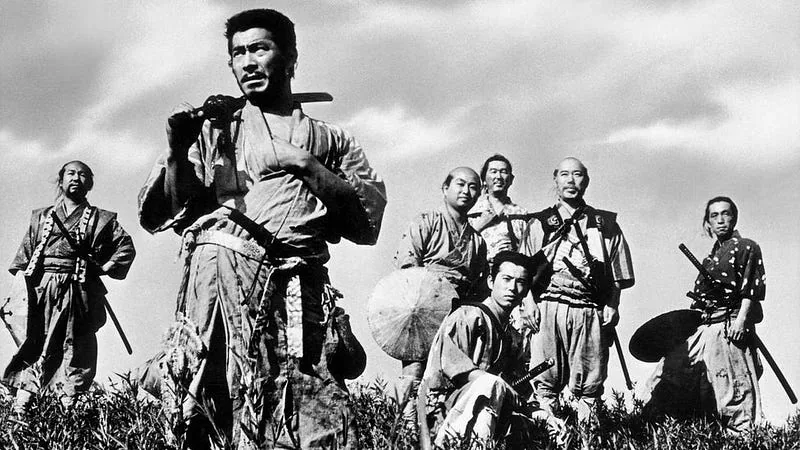
At its core, “Seven Samurai” is about a village tormented by bandits that hire seven samurai to protect them. But that simple synopsis doesn’t capture the layers, the intricacies, or the depth of this cinematic masterpiece.
Fun Fact: One of Indian cinema’s most iconic films, “Sholay” (1975), owes a significant debt to Seven Samurai. Kurosawa introduced us to a magnificent septet of sword-wielding heroes, each distinct, each layered. Bollywood, on the other hand, took the “less is more” approach. Perhaps the producers were pulling out calculators and thinking, “Why pay for seven when two will do? Let’s cut down the heroes to two, add Basanti to the mix, and voila! Cinema gold.”
Kurosawa doesn’t just present heroes and villains. He introduces us to a cast of characters who are intricate, flawed, and profoundly human. The samurai themselves range from stoic leaders like Kambei to the unpredictable and emotionally raw Kikuchiyo. The relationships they build with the villagers, and among themselves, unveil a tapestry of human emotions: from fear and distrust to respect, love, and sacrifice.
Kambei Shimada: The Stoic Leader
Kambei makes a profound entry, selflessly shaving his samurai topknot to rescue a child, setting the stage for his character: a man willing to forsake his pride for a greater good. This act alone speaks volumes about his wisdom and prioritization of humanity over ego.
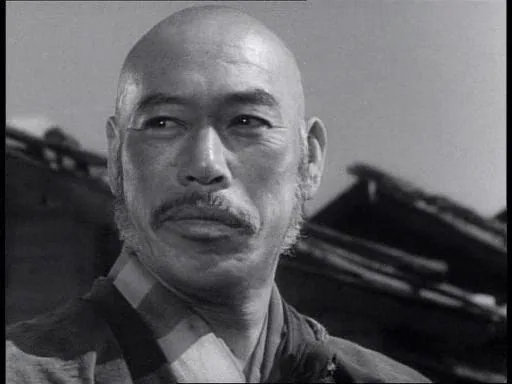
His role is multifaceted. He’s a strategist, teacher, and also a consoler. He patiently selects the samurai, aware that the mission is more about character than sheer skill. As the movie proceeds, Kambei reveals a pragmatic side. He understands the cost of battle, not just in lives lost but in the emotional toll it exacts.
Reflecting on the transient nature of victory and the weight of leadership, Kambei states, “Again we are defeated. The winners? The farmers. Not us.”
His contemplative demeanor hints at a man scarred by the past. He has seen many battles, lost comrades, and witnessed the transient nature of victory. His experience is a double-edged sword, offering him insight while also burdening him with memories of loss and regret.
In a quiet moment, he confesses, “I’ve survived more battles than I care to remember.” It’s not a brag but a somber reflection on his war-filled life.
Kambei’s interactions with other characters, especially Kikuchiyo and Katsushirō, reveal more layers of his persona. He’s not just a mentor but also a fatherly figure, guiding the impulsive Kikuchiyo and nurturing the inexperienced Katsushirō.
His mentoring philosophy comes out when he tells Katsushirō, “Watch and learn.” It’s a simple yet profound piece of advice, emphasizing observation and experience.
Kambei Shimada isn’t just a character; he’s a representation of leadership, sacrifice, and the weight of memories. He’s both a hero and a deeply human figure, bearing the brunt of the past while leading his group towards an uncertain future.
Kikuchiyo: The Fiery Bridge Between Two Worlds
From the outset, Kikuchiyo’s erratic antics and eager attempts to fit in with the samurai offer comedic moments. However, beneath this clownish veneer lies a man in search of identity, acceptance, and validation.
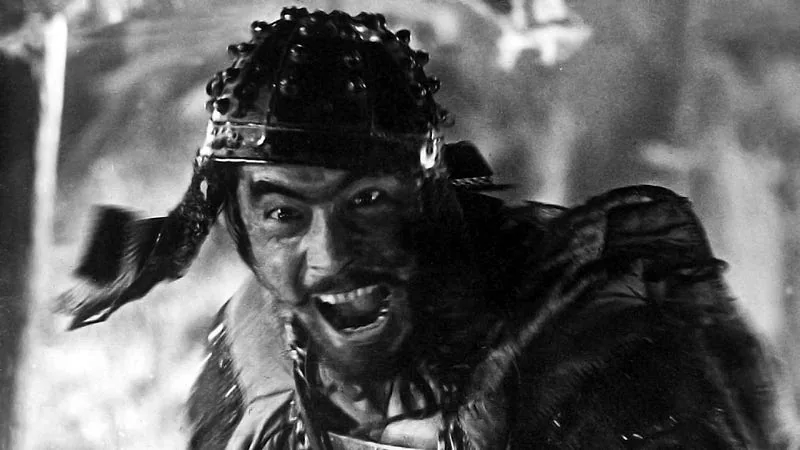
His desperate attempts to be recognized are evident when he proudly presents a family scroll (which is hilariously too long), asserting his samurai lineage.
Kikuchiyo’s journey is one of self-discovery. Initially, he is an outsider, trying to bridge the chasm between the samurai and the villagers. As the narrative progresses, his true origins as a farmer’s child come to light, offering an explanation for his struggle with identity and his deep empathy for the villagers.
His passionate outburst against the samurai, “You burn their villages! Destroy their farms! Steal their food! Force them to labour! Take their women! And kill them if they resist! So what should farmers do?” shows his deep connection to the villagers’ plight.
Kikuchiyo stands as a bridge. His background ties him to the villagers, while his aspirations connect him to the samurai. This duality allows him to understand both sides better than anyone else, making him an essential link in uniting the two groups against a common threat.
Holding a child, he emotionally reveals, “This baby… he’s me.” This confession cements his identity as someone born of the peasant world but striving for the honor and valor of the samurai.
Kikuchiyo’s relationships, particularly with Kambei and the other samurai, are a testament to his growth. He seeks Kambei’s approval and guidance, much like a child would from a parent. With the other samurai, especially Kyūzō, there’s a mix of admiration, envy, and competition.
His rivalry with Kyūzō is evident in his words, “I’ll show you I’m a better swordsman than you!” showcasing his innate desire for validation.
Kyūzō: The Silent Maestro
Kyūzō enters the narrative as a man of few words but with an undeniable presence. His exceptional skills with the sword are immediately evident. Yet, what’s more intriguing is his silent, introspective demeanor which often leaves others, including the audience, trying to decipher the man behind the blade.
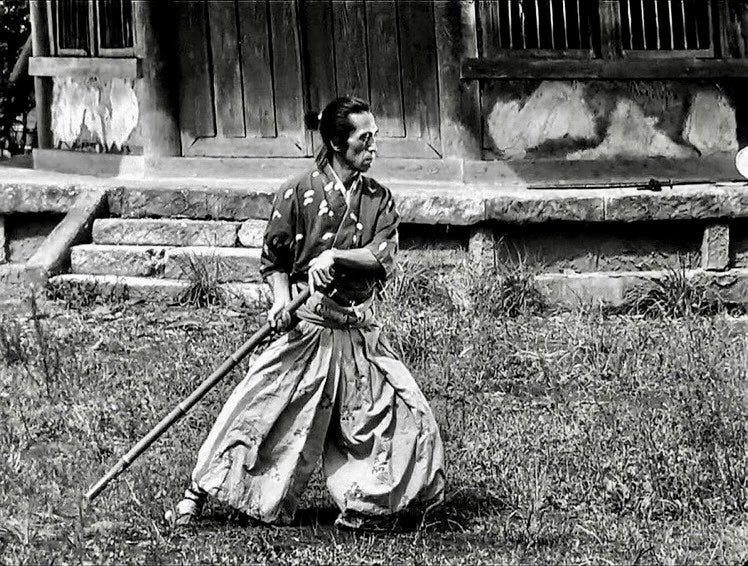
Initially aloof and isolated, he eventually becomes integral to the group’s dynamic. His dedication to his craft never wavers, but he learns to be part of a team, showcasing a quiet kind of leadership.
After a successful duel, when praised, he humbly responds, “I don’t like killing, but if it has to be done, it should be done quickly.” This line underscores his dedication to efficiency over ego.
Kyūzō’s interactions with other characters, especially Kikuchiyo, reveal contrasting philosophies. Where Kikuchiyo is brash and eager to prove himself, Kyūzō is calm and self-assured. Their dynamic offers both tension and mutual respect, with Kikuchiyo’s youthful exuberance playing off Kyūzō’s measured experience.
Kikuchiyo’s mixture of envy and admiration is clear when he exclaims, “Damn that Kyūzō! He gets everything before I do!” after Kyūzō acquires a musket.
Shichirōji: The Loyal Companion
Shichirōji’s introduction, as an old ally of Kambei, immediately sets the tone for his character: one rooted in a shared history. Their easy rapport and mutual respect suggest countless battles fought side by side, and shared moments of triumph and despair.
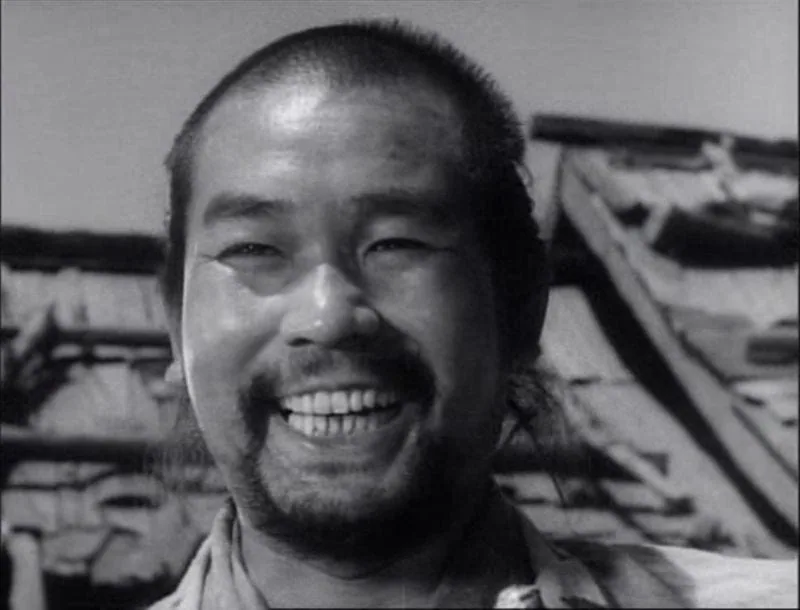
While Shichirōji might not undergo a dramatic transformation in the narrative, his steadfast nature offers consistency. What evolves is not so much the character but our understanding of him, as we learn about his past with Kambei, his place in the group becomes clearer. He is the reliable second-in-command, ever ready to support Kambei’s decisions and strategies.
Shichirōji’s dynamics with other characters, primarily Kambei, underscore the essence of camaraderie and trust. He doesn’t question Kambei’s decisions, showcasing a bond that goes beyond the professional: it’s deeply personal. This trust makes him an anchor for Kambei and, by extension, the entire group.
Rikichi: The Beating Heart of Despair and Hope
When we first meet Rikichi, it’s his urgency and desperation to hire samurai that become palpable. He represents the plight of the common man, vulnerable, yet brimming with a suppressed rage against the relentless adversities of life.
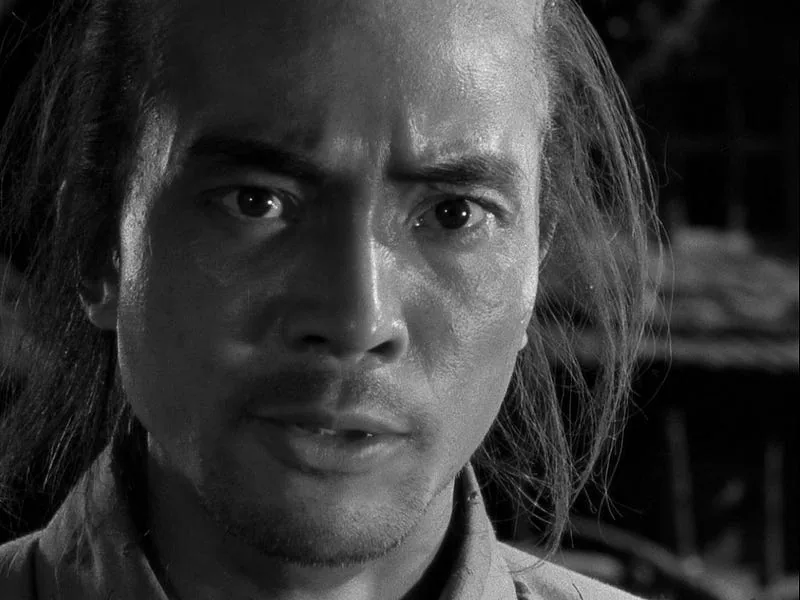
Rikichi’s determination is evident when he exclaims, “We’ll find samurai. Samurai willing to fight!” Here, we witness the desperation and resolve of a man pushed to his limits.
Throughout the film, there’s an evident personal anguish he hides, a torment beyond the village’s predicament. As the narrative unfolds, we discover the source of his pain: the capture and subsequent disgrace of his wife by the bandits. His journey then becomes one of reconciliation and redemption.
Rikichi’s personal tragedy serves as a microcosm of the larger suffering of the village. While the samurai fight a war against external foes, Rikichi wages an internal battle, wrestling with shame, anger, and loss.
The depth of Rikichi’s pain is unveiled during the raid on a bandit’s house when he discovers his wife. His anguished cry, “Why? Why didn’t you kill me then?” reflects the heart-wrenching realization of his wife’s fate and his own sense of powerlessness.
Rikichi’s interactions with the samurai, particularly with Kambei and Kikuchiyo, underscore the movie’s central theme of understanding and unity between two distinct classes. Kambei’s compassion and Kikuchiyo’s own farmer background allow Rikichi’s voice, and by extension, the villagers’ plight, to be acknowledged and addressed.
After diving deep into the world of ‘Seven Samurai’, it’s well worth taking a moment to revisit the trailer. While I stumbled upon a decent version, nothing truly compares to the Criterion Collection edition of the film. Its unmatched clarity and quality ensure the legendary film is presented in all its cinematic glory. If you’re a cinephile, the Criterion version is an absolute must-watch.

Seven Samurai is often celebrated for its revolutionary cinematography, its stirring score, and its intricate battle sequences. However, at the core of this masterpiece lies its characters, each carrying a universe of emotions, complexities, and histories. Each one, from the calm Kambei to the energetic Kikuchiyo and the loyal Shichirōji, shows us different sides of being human. They have their own stories of hope, sadness, love, and loss.
Through them, Kurosawa shows us what it means to be human, with all our good and bad parts. And as the movie ends, their stories stay with us. They make us think about our own lives and the people in them, reminding us that it’s our shared experiences that truly connect us.
That’s my musing for today!