Ancient → Modern
Ancient Commerce with a Modern Conscience
Let’s take a step back in time, journeying to ancient India, to be specific around the 4th and 5th centuries CE. Picture two bustling towns: Aihole and Pattadakal, located in what is now modern-day Karnataka.
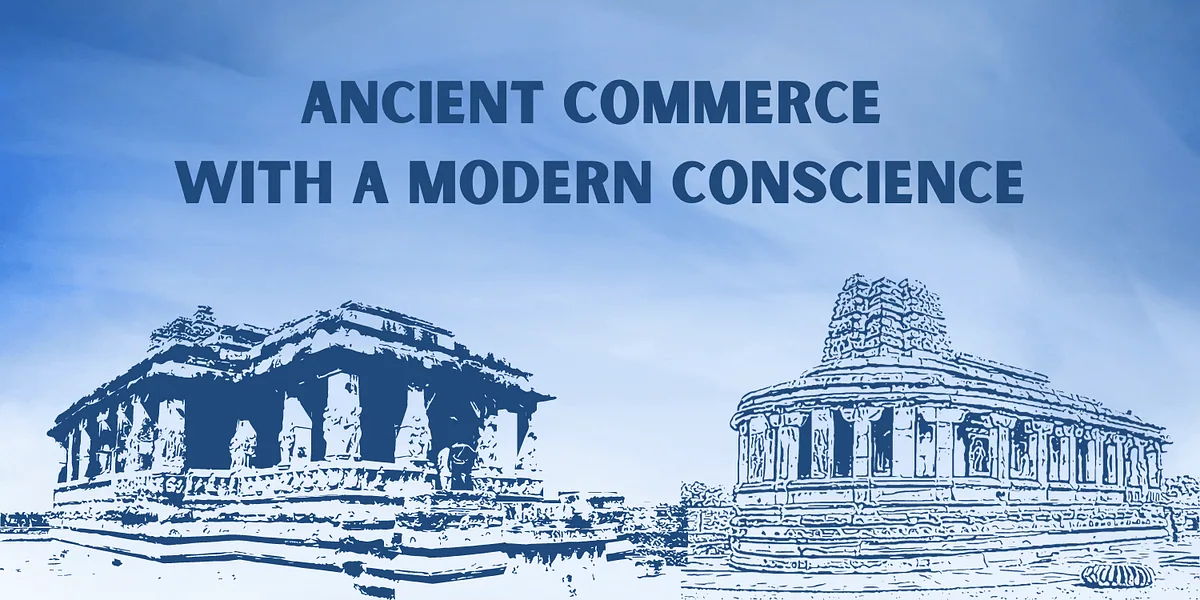
Let’s take a step back in time, journeying to ancient India, to be specific around the 4th and 5th centuries CE. Picture two bustling towns, Aihole and Pattadakal, located in what is now modern-day Karnataka. But here’s the twist: these towns were not just hubs for buying and selling goods. They were dynamic centers, where commerce and culture blended seamlessly. Founded during the era of the Chalukya dynasty, these towns were a magnet for a mix of people, traders, artists, intellectuals, and religious practitioners. They came here not only to make a living but to exchange groundbreaking ideas and cultural norms that were way ahead of their time.
In these towns, doing business wasn’t just about getting rich. People also cared about doing the right thing. And guess who helped them keep their moral compass in check? A group of 500 traders from Ayyavole (Aihole). This wasn’t just any club of merchants. The Ayyavole guild played a big role in setting the rules of fair and ethical trade and had a major impact on society back then.
Aihole and Pattadakal
Imagine a setting where on one hand, artists are diligently carving awe-inspiring temples from solid rock. On the other hand, merchants haggle and barter, trading goods like spices, textiles, and precious gems that come from various parts of India and beyond.
What made Aihole and Pattadakal such unique spots for trade and culture? It boils down to geography. Located at the intersection of several regional routes, connecting areas like Tamil Nadu, Karnataka, and Andhra Pradesh, these towns were cultural and commercial melting pots. But they were more than just weekend marketplaces; think of them as grand bazaars that offered not just material goods but intellectual wealth as well.
Trade in Aihole and Pattadakal wasn’t confined within the borders of India. These towns had a reach that spanned far beyond the subcontinent. Merchants in these ancient towns had links with places as distant as Southeast Asia. They acted as cultural ambassadors, spreading the richness of Indian culture and innovations in trade practices across borders.
The Guiding Force of Ayyavole Guild
In the midst of bustling trade and a confluence of cultures, you’d expect things could get messy. However, the Ayyavole guild functioned as the regulatory backbone for this thriving economic landscape. This was not just a group of merchants; think of them more like a highly organized society with its own rules, ethos, and civic responsibilities.
Known by different names in various languages (Ayyavole in Kannada, Ayyavolu in Telugu, Aryarupa in Sanskrit, and Ainuruvar in Tamil), the 500 merchant strong guild’s influence was particularly significant during the rule of the Cholas, another prominent dynasty in South India. Their impact wasn’t just commercial but extended to cultural and social domains as well.
The Ayyavole guild operated under the philosophy of Veera-Banaju-Dharma, which can be translated as the law of noble or heroic merchants. Their flag bore the image of a bull, symbolizing their daring and enterprising nature. These traders dealt in an assortment of high-value commodities, from gemstones like sapphires, pearls, and rubies to aromatic items like perfumes.
What makes the Ayyavole guild even more fascinating is how they contributed to the society of their time. They were philanthropic, generously contributing to temple construction, supporting education and scholars, and even contributing to irrigation works. It’s like they were practicing Corporate Social Responsibility before it was even coined as a term.
So, the next time you think about trade and commerce as merely transactional, remember the Ayyavole guild. This ancient group of traders from the vibrant towns of Aihole and Pattadakal set a precedent for what business conducted with ethics and social responsibility should look like. They were community builders and trailblazers, defining the core values that make trade more than just a simple exchange of goods.
Guidepost for the Future
Whether you’re an aspiring entrepreneur, a history aficionado, or just someone interested in the dynamics of society, the Ayyavole Guild offers valuable insights. Their ethos of integrity, community service, and valor was not just talk; it was deeply ingrained in how they conducted business and lived their lives. In a world increasingly concerned with ethical trading and social responsibility, their story is not just a chapter from the past but a guidepost for the future.
That’s my musing for today.