Ancient → Modern
Beyond the Battlefield: Unraveling the True Genghis Khan
Few figures are as flattened by their own legend. Behind the conquests sits a lawgiver, a religious pluralist and an administrator worth reading on his own terms.
On this page
- Part I, The Harsh Beginnings
- Role of Hoelun
- The Brotherhood of the Steppes: Temüjin and Jamukha
- The Battle of the Three Banners: Temüjin and Jamukha United
- Part II, The Rise of Temüjin: From Triumph to Transformation
- Seeking Wisdom in Diversity
- The Birth of the ‘Great Mongol Nation’ Vision
- Strengthening Alliances
- The Great Kurultai
- The Yassa: A Unifying Code
- The Ripple Effect
- Timeless Lessons from Genghis Khan’s Life
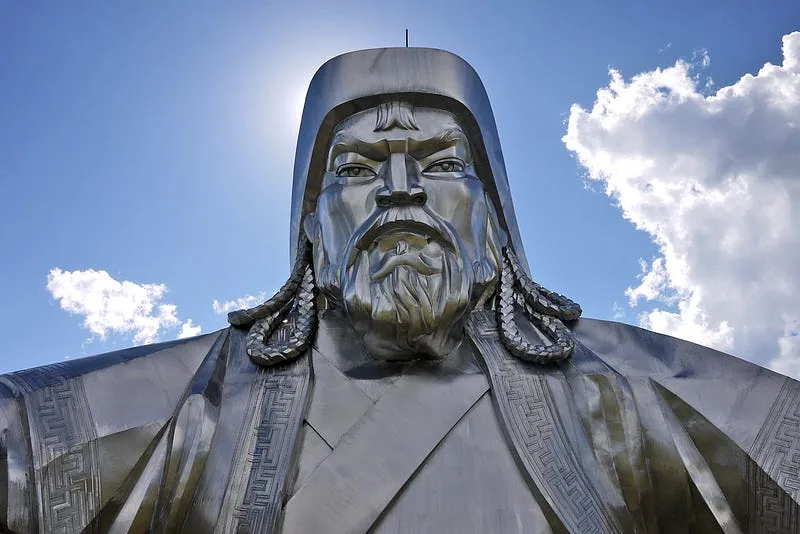
In the annals of history, few figures are as polarizing as Genghis Khan. Often depicted with an iron fist and ruthless strategies, the narrative surrounding him is typically shaded with conquests, invasions, and brutalities. Such a portrayal, largely from the perspectives of the kingdoms he defeated, paints a one-dimensional image of the Mongol leader. But who was Genghis Khan beyond the battlefield? What circumstances and experiences shaped his formative years? How did Temüjin, a young boy from the Mongolian steppes, evolve into Genghis Khan, the emperor of the world’s largest contiguous land empire? And importantly, what skills and traits did he acquire to ascend to such unprecedented heights of power? Drawing insights from “Chengiz Khan” in Telugu by Tenneti Suri and the seminal “Hogwarth’s History of Mongols,” this blog post aims to delve deep into the life and persona of Genghis Khan, offering a more rounded portrayal of the legendary figure.
Part I, The Harsh Beginnings
In the vast steppes of Mongolia, under the relentless sun, a boy was born. This boy came into the world clutching a blood clot, a sign that he was destined for greatness.
The Mongol shamans and elders often interpreted natural events and signs to foretell the future or understand divine messages. Being born with a blood clot in his hand was a rare occurrence and was seen as a strong omen. In the Mongol belief system, this was interpreted as a sign that the child was destined for greatness, perhaps to be a warrior or a leader. Such omens played a crucial role in the tribal culture, guiding decisions and influencing perceptions.
His overjoyed father, Yesugui, named him “Temüjin”, believed to be after his rival chieftain “Temüjin-üge”. “Temüjin” is an old Mongol name, believed to be derived from the word “temür” which means “iron” in Mongolian. One could loosely translate “Temüjin” to “Ironman”?
Life was never simple in the Mongolian plains. Temüjin’s family were nomads, always moving, always looking for their next meal. Yesügei, a chief of a clan, was known and respected. Young Temüjin grew up hearing tales of valor and the complexities of tribal politics. Yet, this peace was short-lived. A treacherous act by a rival tribe saw Yesügei poisoned during a meal. He managed to return to his family, but soon, he succumbed to death. This left young Temüjin, merely nine years old, without his guiding light.
Following Yesügei’s death, their own tribe abandoned Temüjin’s family. Left in the wild, they had to rely on anything they could find, roots, rodents, and the sparse generosity of nature. One day, an argument between Temüjin and his half-brother Bekter over spoils escalated tragically, ending in Bekter’s death. It was a tough lesson for Temüjin about the harsh realities of power and survival.
However, Temüjin’s trials were far from over. Captured and enslaved by a rival clan, he experienced hardship like never before. But his spirit was unbreakable. With the help of a compassionate jailer, he managed to escape, reinforcing his belief in finding allies in the most unexpected places.
Role of Hoelun
Temüjin’s mother, Hoelun, with her fiery spirit and determined gaze, stood as the pillar after Yesügei’s death, holding the remnants of their shattered world together.
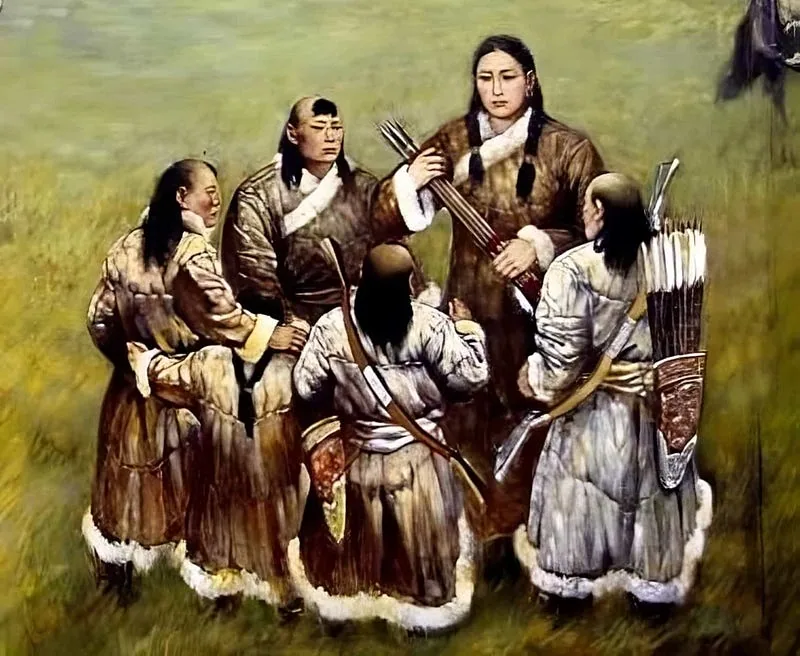
By day, she guided her children across the treacherous terrains, her keen eyes spotting the hidden snares of food and fresh streams, her hands adeptly crafting tools and weapons. By night, under a canopy of stars, she became the storyteller, weaving tales of their ancestors, of valor and treachery, ensuring the lineage was not forgotten. These tales were more than mere stories; they were lessons, imbuing in Temüjin the essence of leadership and diplomacy.
Hoelun’s past was shadowed by her own trials. She was once a captive, stolen by Yesügei from her first husband. This experience had bestowed upon her a deep understanding of the Mongol psyche. In hushed tones, she whispered strategies into Temüjin’s ears, teaching him when to show strength and when to extend a hand for alliance.
But it wasn’t just strategy and survival that Hoelun offered. In the darkest hours, when the cold wind howled outside and the weight of their reality threatened to crush their spirits, Hoelun became the beacon of hope. With her lullabies and promises of brighter tomorrows, she instilled in her children a fire, a resilience that no adversity could extinguish.
The Brotherhood of the Steppes: Temüjin and Jamukha
As young boys, Temüjin and Jamukha first crossed paths during a tribal gathering. With the playful audacity of youth, Temüjin challenged Jamukha to a wrestling match. The duel, intense and evenly matched, ended with both boys on the ground, laughing. Recognizing a kindred spirit in each other, they quickly formed an inseparable bond.
As their friendship blossomed, they swore an oath of ‘anda,’ or blood brotherhood, solidifying their bond even further. With a sharp blade, they made small incisions on their hands and let their blood mix, sealing their promise to always stand by each other.
Together, they were unstoppable. Temüjin, with his strategic mind and instinct for leadership, and Jamukha, with his warrior’s heart and deep knowledge of the land, led their men into numerous skirmishes against rival tribes. They fought side by side, their tactics and bravery becoming the stuff of legends. Victory after victory, their reputations grew, and their bond strengthened.
During their shared adventures, Temüjin learned valuable lessons from Jamukha. Jamukha, with his inherent nobility and sense of justice, taught Temüjin the importance of loyalty and trust. Their camps would echo with laughter as they recounted tales of their youth, but it was during the quiet moments by the campfire that the deeper conversations took place. They discussed leadership, honor, and the vision of a united Mongolia.
Jamukha was a firm believer in the Mongol traditions, emphasizing the importance of respecting the ancestral ways. From him, Temüjin learned the delicate balance of embracing innovation while respecting tradition. He also learned that true friendship was not just about standing by one’s side in battle but also about challenging each other’s ideas and beliefs to bring out the best in one another.
Yet, the most vital lesson Temüjin learned from Jamukha was the power of unity. Witnessing the strength they garnered when together, Temüjin began to envision a Mongolia where tribes were not rivals but allies, working together for the common good.
Their bond was a beacon of hope in a fragmented land, illustrating the possibilities that lay ahead for Mongolia. However, like all great tales, challenges and differing visions would eventually test the strength of their bond. But in these formative years, Temüjin and Jamukha were more than friends; they were brothers, shaping each other’s destinies and laying the foundation for an empire.
The Battle of the Three Banners: Temüjin and Jamukha United
In the rugged terrains of the Mongolian steppes, where skirmishes and tribal feuds were a way of life, the story of Temüjin and Jamukha’s first battle together stands out. They were up against the formidable Tayichi’ud clan, a tribe known for their ruthlessness and skill in warfare.
The Tayichi’ud had been encroaching on territories, pillaging and intimidating smaller tribes. Temüjin and Jamukha, despite their young age, recognized the threat they posed not just to their tribe but to the fragile balance of power in the region.
**The Strategy:**Temüjin, with his keen analytical mind, suggested they employ guerrilla warfare tactics. The Mongolian steppes, vast and unpredictable, were an asset. Instead of confronting the Tayichi’ud head-on in a potentially devastating battle, they would engage in hit-and-run attacks, wearing down the enemy and diminishing their morale.
Jamukha, with his deep knowledge of the steppes, identified strategic points for ambushes. He knew of narrow canyons where they could trap the enemy and elevated plains from where they could observe Tayichi’ud movements without being seen.
Together, they devised a plan: Jamukha’s warriors would serve as bait, drawing the Tayichi’ud into a false sense of security. Once the Tayichi’ud were engaged, Temüjin’s forces would flank them from both sides, taking advantage of the element of surprise.
**The Battle:**As dawn broke, the echo of hooves resonated through the valley. Jamukha’s forces rode boldly into Tayichi’ud’s line of sight, challenging them. Taking the bait, the Tayichi’ud gave chase, driven by overconfidence. As they pursued Jamukha’s warriors into the canyon, Temüjin’s forces lay in wait.
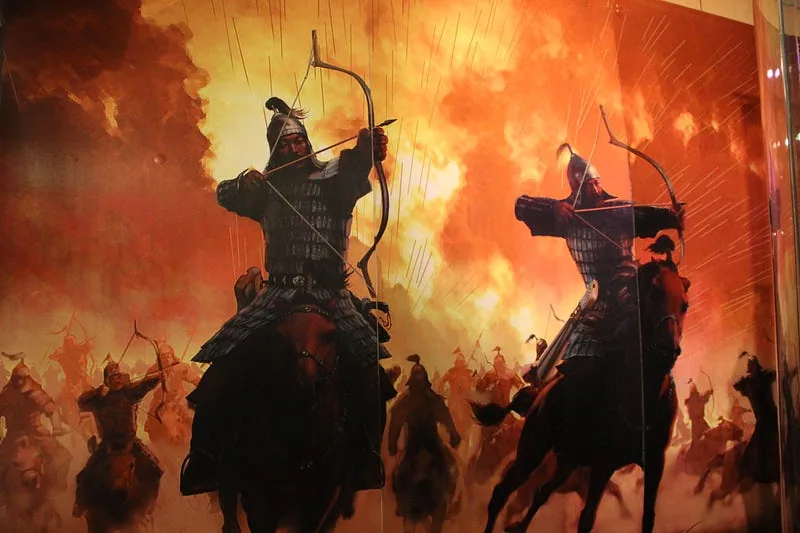
The trap was sprung. Temüjin’s cavalry charged from both sides, arrows raining down, catching the Tayichi’ud off-guard. Panic ensued in the Tayichi’ud ranks. The tight confines of the canyon made it difficult for them to maneuver, and they were quickly overwhelmed.
By sunset, Temüjin and Jamukha stood victorious. The Tayichi’ud were defeated, and the message was clear: together, these blood brothers were a force to be reckoned with.
The success of the battle further cemented their bond. They had combined their unique strengths, Temüjin’s strategic prowess and Jamukha’s intimate knowledge of the land, to devastating effect. This victory was a testament to their partnership and a promise of their potential to bring change and much-needed unity to the Mongolian steppes.
Part II, The Rise of Temüjin: From Triumph to Transformation
After the Battle of the Three Banners, Temüjin’s life was marked by a series of wars and conflicts which not only expanded his territory but also solidified his leadership among the Mongols. Each victory increased his influence and respect among the tribes.
**The Conflict with the Merkit Tribe:**The Merkits had a longstanding grudge against Temüjin, especially because they had once kidnapped his wife, Börte. This personal vendetta gave the battle a deep emotional resonance for Temüjin. With the help of his allies, including Tughrul (Khan of Kerait tribe) and Jamukha, Temüjin defeated the Merkits, rescuing Börte in the process.
This victory was pivotal in establishing Temüjin’s reputation as a formidable leader. It also set the stage for internal rivalries as credit for the victory became a matter of contention among the allies.
**The Rift with Jamukha:**Differences in ideology and governance led to a split between Temüjin and his blood brother Jamukha. While Temüjin favored a meritocratic system, Jamukha was a staunch supporter of the Mongolian aristocracy. Multiple skirmishes and battles occurred over the years. The most notable was the Battle of Dalan Balzhut, where Jamukha’s forces, with the support of Tughrul, ambushed Temüjin. Though Temüjin suffered defeat, he managed to retreat, regroup, and fight another day.
These battles, though taxing, were instrumental in hardening Temüjin’s resolve. They also showcased his ability to rally troops and recover from setbacks. His treatment of captured enemy soldiers, often integrating them into his own army, showcased a different kind of leadership, increasing his popularity.
War against the Tayichi’ud The Tayichi’ud were a powerful Mongol tribe, once allies to Temüjin’s father, Yesügei. After Yesügei’s death, the Tayichi’ud took advantage of the weakened position of Temüjin’s family and even held a young Temüjin captive for a brief period. This earlier betrayal sowed the seeds of animosity.
As Temüjin grew in strength and allies, he remembered the treachery of the Tayichi’ud. Their confrontations were marked by skirmishes and smaller battles. However, with Temüjin’s superior tactics, especially his ability to utilize the mobility of his cavalry, he consistently outmaneuvered and defeated the Tayichi’ud forces.
The Tayichi’ud were eventually subdued. Staying true to his principle of integrating enemies, Temüjin absorbed many of the Tayichi’ud warriors into his own forces. This not only bolstered his ranks but also effectively diminished potential future threats from this quarter.
**War against the Naimans:**The Naimans, west of the Mongol heartland, were among the most formidable of the Mongol tribes and the last significant obstacle to Temüjin’s unification of the Mongols.
Aware of the Naimans’ strength, Temüjin used espionage to gather intelligence. He sent spies to the Naiman camp, one of whom was discovered. This led to the Naimans being alerted to Temüjin’s intentions, and they forged an alliance with several other tribes, including remnants of the Merkits, to counter him.
The battle that ensued was intense. Both sides were well-matched in terms of numbers and capability. Temüjin employed his now-signature tactics, like feigned retreats, to lure parts of the Naiman army into ambushes. Furthermore, the use of coordinated movements, signaled by drums, allowed Temüjin’s forces to respond flexibly to changing battlefield conditions.
The Naimans were defeated, with their Khan, Tayang, being killed in the battle. This victory was monumental for Temüjin. With the Naimans subdued, the path to unifying the Mongol tribes was now largely clear.
By integrating warriors from defeated tribes into his army and offering them the same status and opportunities as his original followers, Temüjin displayed an innovative approach to leadership. This not only enlarged his forces rapidly but also cultivated loyalty and reduced the chances of future rebellions.
The victories over the Tayichi’ud and Naimans were not just military achievements; they were strategic masterstrokes that showcased Temüjin’s brilliance in warfare, statecraft, and leadership.
Seeking Wisdom in Diversity
While the numerous battles established Temüjin’s supremacy in the region, it was also a sobering reminder of the price of warfare. The loss of life, the disruption of nomadic cycles, and the bitter rivalries brought to the fore made him ponder deeper into the root causes of such conflicts.
Temüjin realized that many battles weren’t just over territorial supremacy but were driven by deep-seated tribal grudges, misunderstandings, and the hunger for vengeance. The Mongolian plateau, despite its vastness, was riddled with fragmented narratives and ancient feuds.
To address this, Temüjin transformed his camp into an epicenter of knowledge and dialogue. He began to invite shamans, elders, and storytellers from different tribes. These were not merely ceremonial visits; they were intense brainstorming sessions. Stories of old feuds were dissected, tribal customs compared, and strategies of past rulers debated.
Such interactions provided Temüjin with a holistic view of Mongolia. He learned about the different ways of life, aspirations, and fears of various tribes. By understanding the intricacies of these narratives, Temüjin could draft a strategy that catered to the majority, ensuring wider acceptance.
The Birth of the ‘Great Mongol Nation’ Vision
This period of reflection was transformative for Temüjin. It was during these sessions that the seeds of a ‘Great Mongol Nation’ were sown in his mind. A nation where tribes, instead of warring against each other, would work collaboratively towards mutual prosperity. He envisaged a realm where shared values would overpower divisive traditions, and where the strength of a united Mongolia would deter any external force.
With a clear vision in mind, Temüjin started focusing on the finer details. He noted that many tribal conflicts arose from a lack of clear communication. He initiated the practice of sending envoys to mediate disputes before they escalated into conflicts.
Additionally, Temüjin started a series of ‘knowledge expeditions’. Young warriors were sent across tribes, not as spies, but as learners. Their goal was to understand and document the strengths, strategies, and customs of various tribes. This intelligence was invaluable in framing diplomatic strategies, trade negotiations, and military tactics.
Strengthening Alliances
While his bond with Jamukha was profound, Temüjin recognized the importance of forging new alliances. He leveraged matrimonial alliances to knit together the diverse Mongolian tribes. His own marriage to Börte, a member of the Onggirat tribe, was not just a union of two souls but also a strategic alliance that brought with it warriors and resources. Börte, with her intelligence and wisdom, also played a pivotal role as a trusted advisor in many of Temüjin’s subsequent political decisions.
His children, too, were wed to influential members from different tribes, effectively weaving a network of loyalties that spanned the Mongolian plateau.
Understanding that alliances weren’t just built on blood and marriage, Temüjin focused on the economic aspects of tribal relations. He promoted trade between tribes, ensuring that goods and resources flowed seamlessly across territories. This economic interdependence not only fostered peaceful relations but also ensured that tribes prospered together, thereby solidifying their loyalties.
Additionally, Temüjin’s meritocratic approach to leadership began to take shape. Unlike other chieftains, he promoted individuals based on their skills and loyalty rather than their lineage. This revolutionary practice attracted talented warriors and strategists from diverse tribes, further strengthening his force.
The Great Kurultai
After unifying the Mongol tribes and decisively defeating his rivals, Temüjin called for a Great Kurultai, a grand assembly of Mongolian chieftains, leaders, and influential figures. It was during this assembly that he was proclaimed “Genghis Khan,” a title translating to **“Universal Ruler”.**This was a monumental event in Mongolian history and symbolized the formal unification of the Mongol tribes under a single leader.
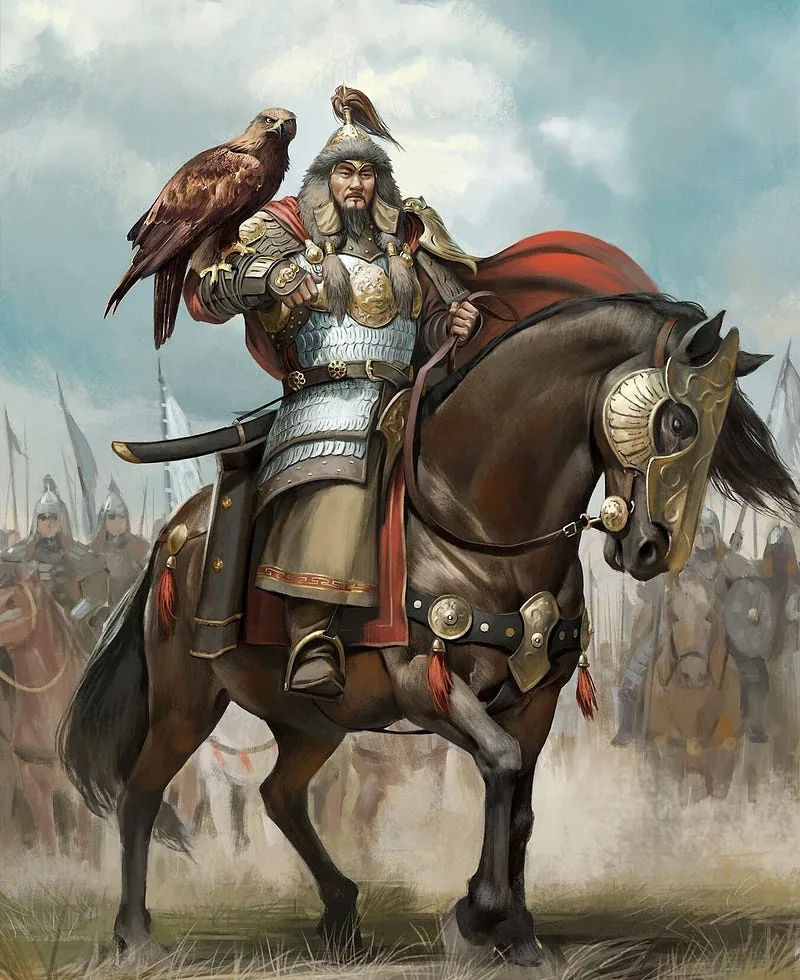
The ceremony of the Kurultai was both political and symbolic. Located on the banks of the Onon River, it began with grand festivities, including competitions of archery, wrestling, and horse racing: the three manly games central to Mongol culture. The main event was the gathering of the chiefs and leaders, where discussions and deliberations about the future direction of the unified tribes took place.
The proclamation of Temüjin as Genghis Khan wasn’t just an ad-hoc decision. It was a deliberate choice made by the assembled leaders, recognizing both his military achievements and his vision for the Mongol people. With the title, Genghis Khan not only became the leader of all Mongols but also assumed a semi-divine status, with a mandate that was believed to be given by Tengri, the sky god central to Mongol spirituality.
Temüjin’s speech at the Kurultai was not just about conquests and territorial gains. It was a dream of a Mongolia where tribes didn’t just coexist but thrived together. He spoke passionately about mutual respect and the need to rise above petty tribal feuds. The emphasis was on cooperation, a Mongolia where tribes supported one another, ensuring shared prosperity in both peace and war.
The Yassa: A Unifying Code
Arguably the most significant moment of the Kurultai was the introduction of the Yassa. This wasn’t just a set of laws; it was a social contract, a commitment to a new way of life. The Yassa was a testament to Temüjin’s foresight, recognizing that military might alone couldn’t sustain an empire. For an empire to endure, there needed to be a framework that instilled order, discipline, and a shared sense of purpose.
The laws were strict, leaving little room for ambiguity. From matters of trade and commerce to personal conduct and warfare, the Yassa covered a vast spectrum of governance. One of its main objectives was to reduce internal feuds, which had for long plagued Mongolian tribes. By addressing common causes of disputes, like theft, adultery, and murder, the Yassa aimed to bring a sense of justice and fairness to the vast Mongolian plateau.
The Ripple Effect
The Great Kurultai wasn’t just a moment in history; it was a turning point. The vision set forth by Temüjin and the implementation of the Yassa laid the groundwork for the transformation of a fragmented landscape into a cohesive force. Tribes that once viewed each other with suspicion now had a common code to abide by, a shared identity to embrace.
Timeless Lessons from Genghis Khan’s Life
The meteoric rise of Temüjin, from a destitute tribal boy to the unparalleled Genghis Khan, is replete with lessons that echo through the ages. Here’s a closer look at these teachings and their resonance in the broader narrative of life and leadership:
1. Resilience in the Face of Adversity: From the tender age of nine, Temüjin faced unparalleled hardships. His father’s assassination left his family ostracized and impoverished. However, instead of succumbing to despair, these early challenges instilled in him an unwavering resolve to survive and thrive. Lesson: Life’s challenges are not meant to break us, but to mold us into stronger, more resilient beings.
2. Value of Alliances: Throughout his life, Temüjin understood the importance of creating and maintaining alliances. His early alliance with Toghrul, for instance, was crucial for his survival and initial rise to power. Lesson: No man is an island. The relationships and alliances we foster can be our most significant assets, especially in challenging times.
3. Adaptability: Temüjin’s military strategies often highlighted his ability to adapt swiftly to changing scenarios. Instead of sticking to one tactic, he was always open to innovation and new ideas, which played a critical role in his conquests. Lesson: Being rigid in our ways can be our downfall. The ability to adapt is key to overcoming unforeseen challenges.
4. Inclusivity and Meritocracy: One of the cornerstones of Temüjin’s leadership was his departure from tribal nepotism. He promoted individuals based on merit rather than lineage, breaking traditional Mongol norms. This ensured loyalty and fostered a sense of unity in his ranks. Lesson: Judging individuals by their abilities and not their backgrounds fosters a culture of excellence and loyalty.
5. Visionary Leadership: Temüjin’s dream was not just to conquer but to unify. His vision of a united Mongol empire was what drove his campaigns, policies, and governance. Lesson: Having a clear and compelling vision can steer one’s actions, inspire others, and pave the way for monumental achievements.
6. The Importance of Codified Governance: With the introduction of the Yassa, Temüjin demonstrated the importance of having a structured set of laws to govern a diverse set of people. It was instrumental in reducing internal conflicts and promoting order. Lesson: Structure and order, when implemented judiciously, can lead to harmony and collective growth.
The life of Temüjin is not just a tale of battles and conquests but a testament to human potential. It’s a reminder that irrespective of our beginnings, what truly defines us is our vision, determination, and the choices we make along the journey. As we reflect on the life of this tribal boy who became the legendary Genghis Khan, we find timeless lessons on leadership, perseverance, and the indomitable human spirit. Whether in the vast steppes of Mongolia or the challenges of modern life, these teachings hold relevance, guiding us towards our own unique legacies.