Ancient → Modern
Tracing Ancient Footsteps in Kurnool
Human resilience is a story written in the sands of time, marked by relentless pursuit of survival and exploration. Our journey began in the heart of Africa, where our ancestors first walked the earth.
Human resilience is a story written in the sands of time, marked by relentless pursuit of survival and exploration. Our journey began in the heart of Africa, where our ancestors first walked the earth. These early humans embarked on multiple migrations, spreading across continents in a testament to their unyielding spirit.
The earliest known human settlements, discovered in Morocco, date back approximately 380,000 years. During this period, humans were evolving, learning to harness their environment for survival. Concurrently, in India, just outside of Chennai, Quartzite tools unearthed at Attirampakkam date back to between 250,000 and 385,000 years ago. This discovery indicates that our ancestors had already established themselves in the Indian subcontinent long before their monumental journey out of Africa.
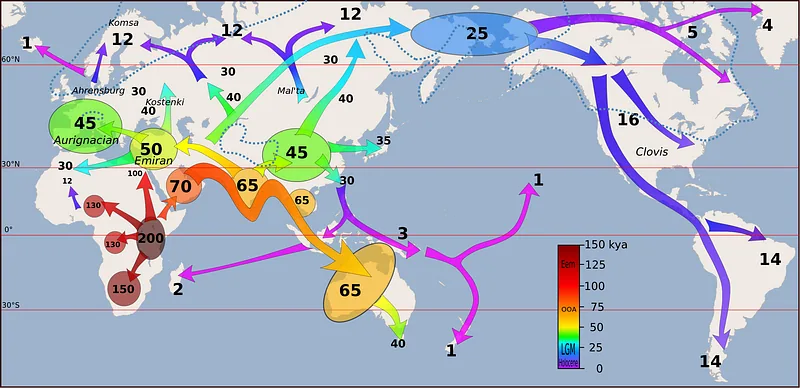
The most significant migration out of Africa occurred between 65,000 and 70,000 years ago. This wave of migration was different from the previous ones. It marked the advent of modern humans who ventured across Arabia and entered India, bringing the seeds of civilization with them. This group of intrepid explorers continued their journey, eventually populating the rest of the world. Their migration was not just a movement of people but a transfer of knowledge, culture, and innovation, laying the foundation for future societies.
One of the most profound events during this period was the eruption of the Toba Volcano in Sumatra around 74,000 years ago, predating the major migration into India. This cataclysmic event was one of the largest volcanic eruptions in the history of our planet, spewing vast amounts of ash into the atmosphere and causing a volcanic winter. The impact of Toba’s eruption was felt globally, with drastic climate changes threatening early human populations’ survival. In India, the Toba eruption left a significant mark, both on the land and its inhabitants.
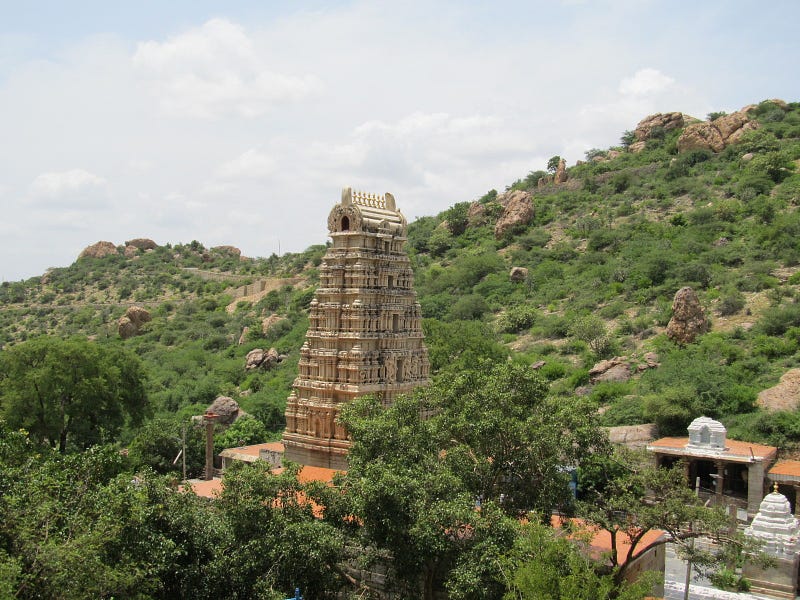
The archaeological site of Jwalapuram, in Kurnool, Andhra Pradesh, offers a fascinating glimpse into this turbulent period of human history. Jwalapuram is near to the historical Yaganti temple. As a child, I visited the Yaganti temple a few times. The stark and ancient landscape of this region, dotted with caves, always struck me as a place where early humans might have found refuge and sustenance. My childhood musings have been vindicated by the discoveries made at Jwalapuram. Here, archaeologists have uncovered a layer of Toba volcanic ash, a tangible reminder of the eruption’s far-reaching consequences. This site is one of the few places in the world where such evidence is visible, with another notable location being in Africa.
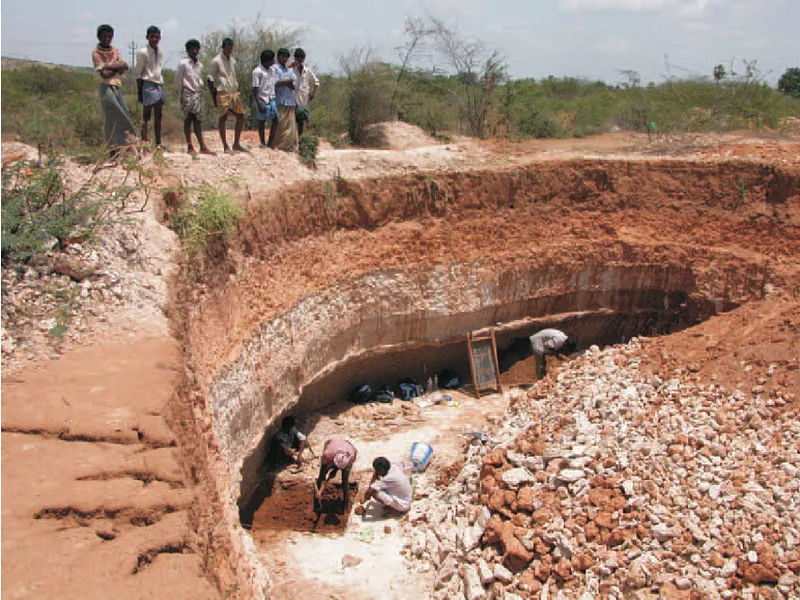
The connection between the Toba eruption and human migration is vividly illustrated by the archaeological findings at Jwalapuram. Excavations at this site have uncovered stone tools and artifacts that date back to the time immediately before and after the Toba eruption. These findings provide compelling evidence that humans were present in South India both before and after this volcanic event, suggesting they survived and adapted to the harsh post-eruption environment.
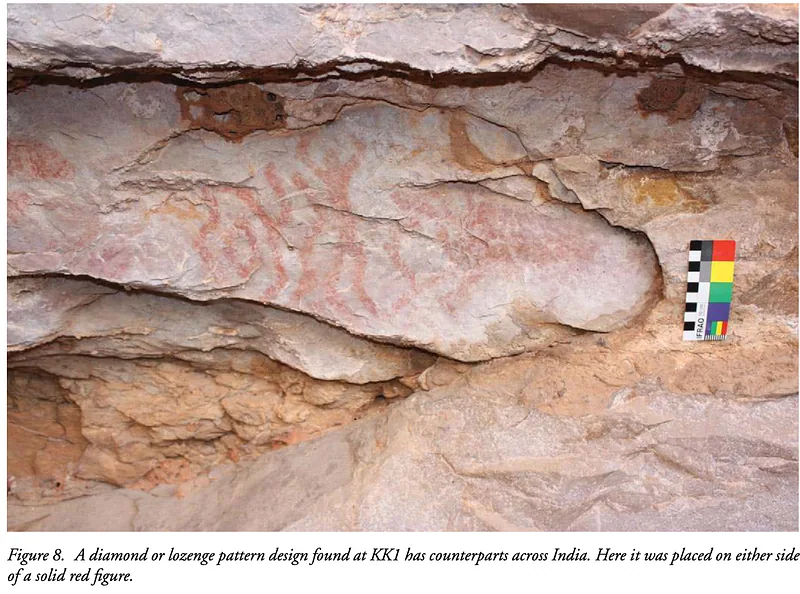
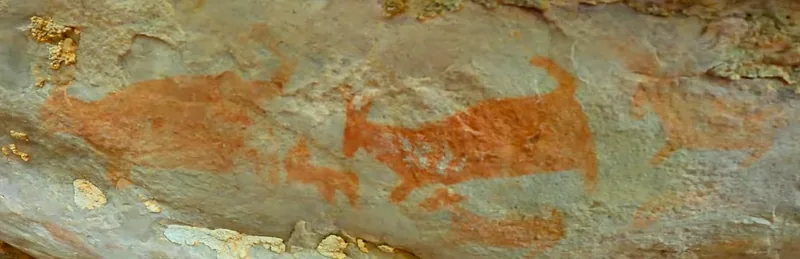
Recently, further explorations around Jwalapuram and Yaganti have revealed cave paintings that date back thousands of years. These ancient artworks depict tigers, humans hunting with spears, and bisons, providing a vivid window into the lives of our resilient ancestors. These paintings, currently exposed to the elements, await further study and preservation. I plan to explore these areas more deeply, perhaps on a hiking trip, to uncover more of the secrets they hold.
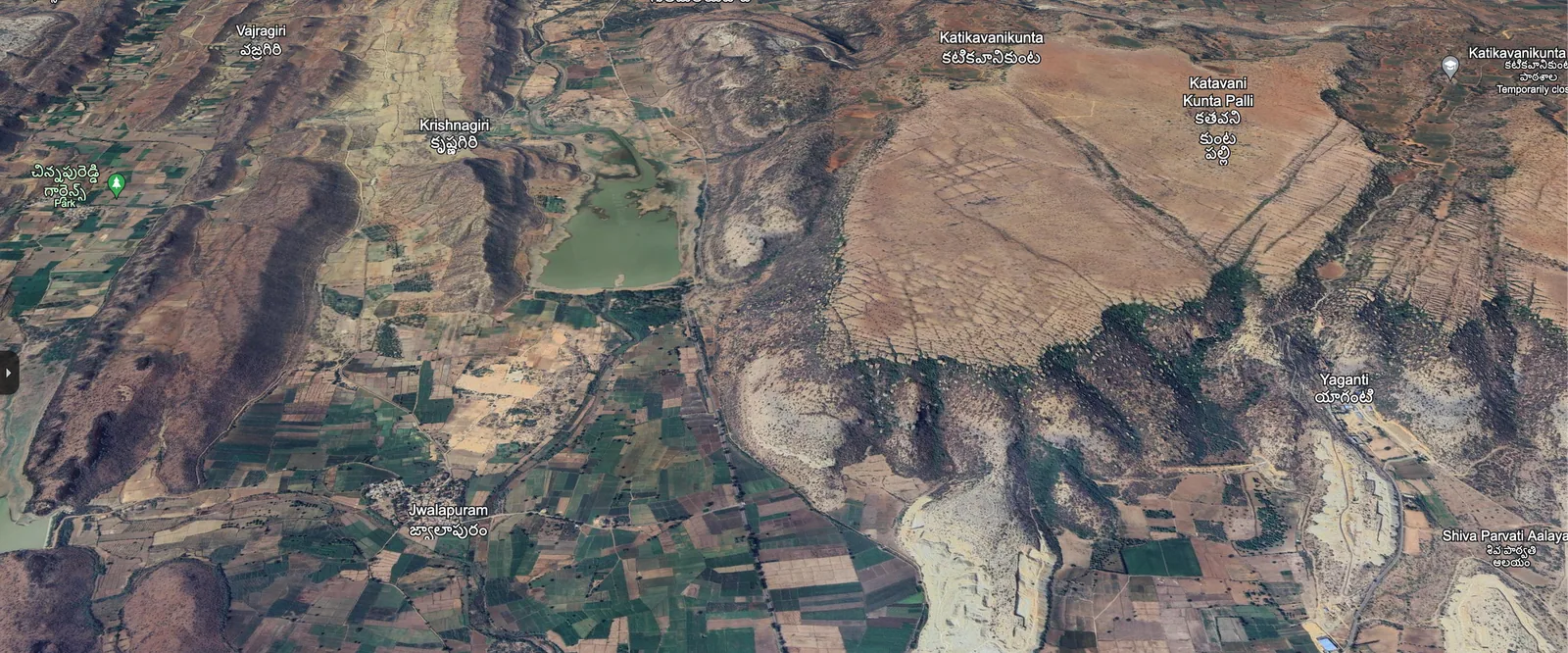
Looking at the landscape from above, one can observe what appears to be the dry bed of a vast water body surrounding Yaganti, Jwalapuram, and neighboring villages. This topographical feature suggests that the area once supported a vibrant ecosystem, sustaining early human communities who thrived in its embrace.
The evidence from Jwalapuram, combined with the cave paintings near Yaganti, paints a powerful picture of human resilience. These early humans, our ancestors, weathered the catastrophic effects of the Toba eruption and continued to survive and adapt. Their ability to endure such hardships and leave behind enduring marks of their existence is a testament to the resilience that defines our species.
This story of migration, survival, and adaptation underscores the unyielding human spirit that has driven us to overcome challenges, explore new frontiers, and leave our mark on every corner of the world.
That’s my learning for today!