Indian Thought
The Layered Birth of Gods
One temple accepts only flowers; another remembers blood. Read those differences as fossils rather than local flavour, and the gods start to look assembled.
Written 2026 Looking across Prehistory → the classical world
On this page
- Before Gods
- Before Gods had Faces
- Fear is Not the Opposite of Faith
- The Goddess as the First Interface With Chaos
- Absorption, Not Erasure: Why Indian Gods Multiply
- It Was Never Only Goddesses
- When Philosophy Arrived
- Contradiction is a Feature, Not a Bug
- When Modernity Arrived
- Can This Layered Inheritance Survive Another Century?
Most of us inherit gods the way we inherit language, without remembering the first time we learned them. We grow up around temples, festivals, calendar art, and familiar names. The divine becomes… obvious, as if the gods have always existed exactly as we see them today: calm or fierce, motherly or terrifying, seated in stone or framed in mythology.
And yet, if you watch closely, the inheritance doesn’t behave like a single system.
In one temple, the deity accepts only flowers. A few kilometers away, another temple bears the memory of blood.
One god feels like a loving parent. Another feels like a live wire … protective, yes, but only if approached correctly.
We usually file these under “different traditions” and move on. Local flavor. Regional variation. Nothing to interrogate.
But what if these are not quirks at all?
What if they’re fossils .. evidence of how divinity was assembled over time?
Here is the question we rarely pause to ask:
**What if our gods did not begin as gods … at least not in the way we imagine them today? **What if they began as responses to fear, uncertainty, survival, and the raw unpredictability of life?
What if the earliest form of the sacred wasn’t belief… but negotiation?
This blog is an attempt to explore that possibility.
Not to rank traditions. Not to question devotion. Not to decide what is “pure” or “corrupted.”
Just to understand something more fundamental:
How did the Indian subcontinent learn to live with power … and how did that learning slowly turn into gods?
To do that, we have to loosen one comforting assumption: that religion always begins with ideas.
Often, it doesn’t.
Often, it begins with need.
Before Gods
Imagine a human community thousands of years ago.
No hospitals. No meteorology. No germ theory. No written history. Life is shaped by forces that arrive without warning … fever, drought, floods, wild animals, sudden death, infertility. These aren’t abstract problems. They’re immediate and fatal.
In such a world, religion doesn’t begin by asking, “What is ultimate reality?”
It begins with something more urgent:
“How do we keep things from falling apart?”
Think of how people behave around technology they don’t fully understand.
A phone that works only if you tap it twice. A laptop that behaves better if you restart it before using it. A superstition about saving your work before clicking a button … just in case.
Most of us don’t know why these things work. But if something “seems” to help, we repeat it. If a particular action preceded safety once or twice, it becomes a habit. Over time, habit becomes a rule.
Early religion worked like that.
A ritual was performed not because it was philosophically “true”, but because it felt effective. If a certain act preceded rainfall once or twice, it was remembered. If a specific offering coincided with recovery from illness, it was repeated.
Over generations, those remembered responses hardened into tradition.
This is a crucial reversal of our modern assumption. We imagine ideas come first and rituals follow. Historically, people acted long before they explained.
Meaning came after memory.
And because survival was the goal, early religion wasn’t designed to be neat. It was designed to work.
Survival doesn’t demand consistency. It demands redundancy.
Think about how we behave when something truly matters.
When a document is important, we don’t keep just one copy. We photocopy it. We scan it. We email it to ourselves. We store it on a hard drive and in the cloud. Sometimes, we even keep a physical copy in a drawer … just in case everything else fails.
Redundancy looks messy on paper. But it is what keeps systems alive under stress.
Early religion worked in exactly this way. When people lived in a world where drought, disease, and death could arrive without warning, they didn’t search for the most coherent explanation of reality. They searched for what reduced risk.
If one ritual seemed to help, it was remembered. If another seemed to work in a different situation, it was kept as well. No one asked whether the two rituals logically agreed with each other.
Because logical agreement doesn’t stop famine. What mattered was this: When things go wrong, do we have more than one way to respond?
So communities didn’t place all their hopes in a single ritual, a single deity, or a single explanation. They layered practices. They diversified responses. They created backups.
Rain ritual. Fertility offering. Boundary protection. Healing rite. Appeasement when nothing else worked.
Each one was a copy stored in a different place.
Explanations come much later.
And when they come, they don’t erase the older practices. They sit on top of them … like new sediment settling over old ground.
To see how this survival logic shaped divinity itself, we have to look at what came before recognizable gods … before faces, names, and stories.
Before deities, there was something else.
There was power.
Before Gods had Faces
Once you let go of the idea that religion begins with fully formed deities, a shift happens. In the earliest layers of the subcontinent, the sacred was not imagined as a person watching over the world.
It was experienced as power … intense, unpredictable, and sometimes dangerous.
And this kind of power doesn’t need a face. It announces itself through places:
A hill where storms gather. A forest where people don’t return. A river that nourishes and destroys. A boundary where disease spreads. A cremation ground where the living feel thin against the dead.
At this stage, the sacred isn’t something you “believe”.
It’s something you “encounter”.
That’s why early sacred forms are often not statues in the modern sense, but markers of presence: a stone, a mound of earth, a neem tree, a wooden post, a buried pot, a rough slab smeared with vermillion.
These are not “unfinished idols”. They are complete in their own logic.
They don’t depict what the power looks like.
They simply say: it is here.
A face implies predictability. Early sacred power was anything but predictable.
So people didn’t ask, “Who is this god?”
They asked something more practical:
“What does this place demand?”
Because once power is tied to place, it becomes local. And once it becomes local, it becomes negotiable.
Offerings are made. Boundaries are marked. Rules are followed. Certain actions are avoided. Others are repeated.
And slowly, stories gather around intensity.
The unnamed presence becomes a spirit. A guardian. A mother. A lord.
Personality grows around power … like a shell forming around a force.
The direction matters: Power first. Personality later.
This pattern isn’t unique to India. Many ancient cultures moved from natural forces to named deities.
What’s distinctive about the Indian subcontinent is something else:
It never fully abandoned the older layer.
Even today, beneath many grand temples, you can sometimes sense it: an older marker of presence that doesn’t quite match the polished theology around it. A stone that locals bow to first. A small shrine at the edge that everyone respects quietly. A ritual that survives because people remember what happens when it’s ignored.
These aren’t relics. They’re reminders.
Lets draw a quick map of how gods evolve! Not as doctrine … just as a recurring pattern.
Across the subcontinent, divinity often grows through something like this:
- Power is encountered (as force/place)
- Power is negotiated (ritual, offerings, boundaries)
- Power becomes local authority (guardian/mother/lord)
- Power gains story + morality (myth, ethics, identity)
- Power gains metaphysics (philosophy, ultimate reality) This map is not a straight ladder that everyone climbs. It’s more like layers that accumulate.
And under stress … illness, drought, fear .. older layers often become active again.
Now we can look at one of the most misunderstood ingredients in that early layer.
Fear.
Fear is Not the Opposite of Faith
We want religion to be calm, moral, reassuring. Anything involving appeasement, dread, blood, or taboo gets labeled primitive.
But that assumes something early communities did not assume:
That the sacred is fundamentally benevolent.
When people lived close to famine, disease, wild landscapes, and sudden death, the world did not appear kind or orderly.
It appeared volatile. The same forces that nurtured one season could destroy the next. In such a world, fear wasn’t irrational. It was accurate perception.
So early religion didn’t begin by asking, “How do I love this power?”
It began by asking: “How do I avoid provoking it?”
This is where appeasement enters religious life … not as moral failure, but as realism.
Offerings become negotiation. Taboos become containment. Ritual becomes a way of saying: we recognize what we are dealing with.
And this is where blood appears in many cultures, including parts of the subcontinent.
Blood carries a universal meaning: life, death, fertility, and irreversibility in one substance.
To offer blood is to say: this is not symbolic. This is consequential.
It doesn’t mean early religion was constantly violent. It means that in moments of crisis … epidemics, drought, unexplained deaths … ritual intensity often increases.
When the world becomes more dangerous, the response becomes more intense.
(See Kalika Purana; Kinsley, Hindu Goddesses )
You can see this logic across the subcontinent at the edges of life: Village boundaries, forests, disease-prone zones, thresholds like birth and death, etc. What matters is not the surface form of the ritual.
It’s the grammar beneath it: Fear is not the absence of faith. It is faith without sentimentality.
Much later, devotional traditions will reinterpret fear as awe, terror as reverence, appeasement as surrender.
But the older language never fully disappears.
Even today, when life breaks open … illness, loss, uncertainty … people return to vows and urgent rituals instinctively, because those speak directly to unpredictability.
I remember this from my own childhood.
When I had chicken pox, my mother did not choose between medicine and ritual. She used both.
She gave me the medicines the doctor prescribed. She followed every instruction carefully. Fever was monitored. Food was regulated. Nothing practical was ignored.
And then she made an offering at the local grama devata temple. There was no sense of contradiction in her mind. No debate about science versus belief. She wasn’t hedging intellectually … she was hedging existentially.
Medicine addressed the body. The offering addressed everything medicine couldn’t … fear, anxiety, the unknown, the feeling that something larger was at play.
This wasn’t confusion. It was redundancy.
Just as we back up important files in more than one place, she backed up care in more than one register. If one response failed, another was already in place.
And that instinct … to not rely on a single explanation or method when the stakes are high … is not irrational.
It is how humans have always prepared for things going wrong. This is what older religious layers understood intuitively.
When survival matters, you don’t optimize for consistency. You optimize for coverage.
The Goddess as the First Interface With Chaos
If you look at early religious layers across the subcontinent, one pattern repeats again and again:
Feminine divinity arrives early … and often arrives fierce.
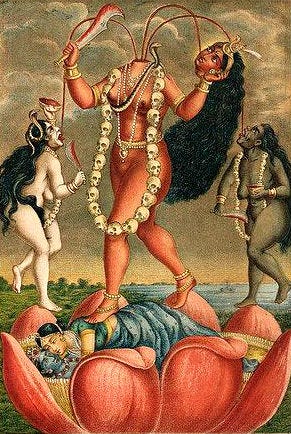
It’s tempting to treat this as political evidence: matriarchy, feminism, or primitive fear projected onto women. But the deeper point is more grounded. The earliest goddesses were not symbols. They were interfaces.
They stand at the meeting point between human life and forces it cannot control .. birth, blood, fertility, disease, death, renewal.
These are bodily, cyclical, and dangerous realities. Long before they were wrapped in philosophy, they were visible … especially through women’s bodies and the rhythms of reproduction.
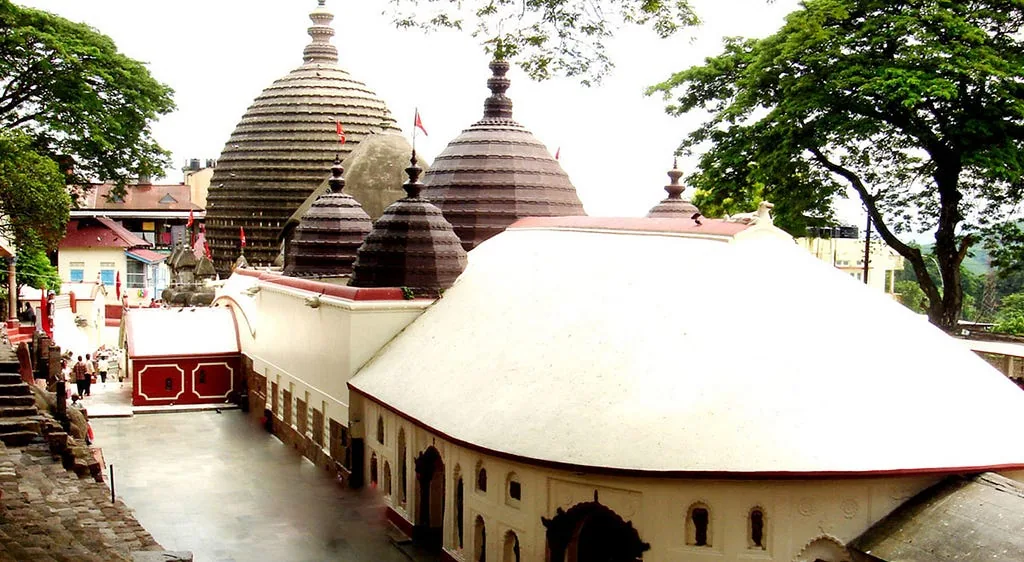
This is why early goddesses are rarely gentle in their most ancient forms.
They guard boundaries. They regulate fertility and childbirth. They protect against epidemics. They punish neglect.
They are not approached casually.
They are approached correctly.
In many village contexts, the goddess is not primarily a figure of personal devotion. She is a custodian of balance.
When something goes wrong … crops fail, illness spreads, children fall sick … the question is often not “Why is she angry?”
It is: “What have we failed to acknowledge?”
That is a different religious logic. Here, the goddess isn’t morally superior to humans. She is simply more powerful. And power doesn’t need to be kind to be sacred.
Later, as larger systems expand … kingdoms, temples, texts … local goddesses are absorbed into pan-Indian frames: Durga, Kali, Parvati, Shakti.
Their stories are retold. Their edges are softened. But absorption is not erasure.
The older logic remains visible in ritual: specific days, taboos, offerings, vows. Even when a goddess is spoken of as compassionate, there’s often an unspoken respect that feels like caution.
Because underneath the motherly language is an older truth:
She began as a way to live with chaos.
Absorption, Not Erasure: Why Indian Gods Multiply
By now, a pattern is visible. Religious change in the subcontinent often didn’t happen by replacement. It happened by addition.
When new ideas arrived, older powers rarely vanished. They were reinterpreted, relocated, absorbed.
A local power didn’t disappear when a temple was built.
It moved inside the temple .. or beneath it .. or into a story that gave it a new name.
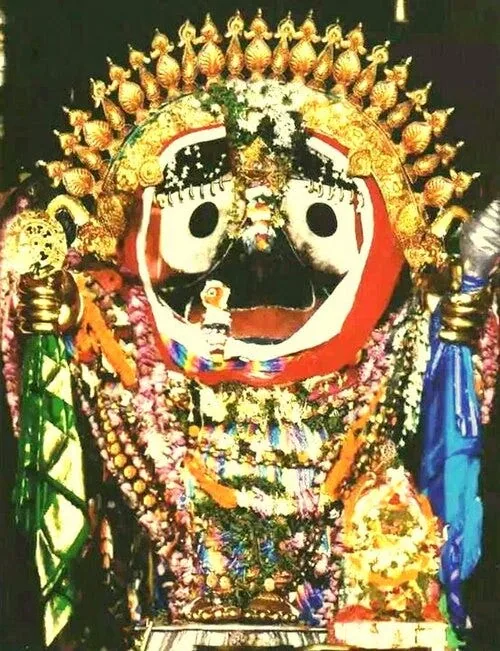
A fierce presence didn’t vanish when moral language arrived.
It became a protector. A guardian. A force of justice.
This is why Indian deities often feel layered … even contradictory.
A god can be cosmic in philosophy and local in ritual. A shrine can chant refined mantras while still observing very old taboos.
These aren’t design flaws. They’re historical traces.
One way to understand Indian religion is not as a system, but as a landscape.
Over time, layers settle like sediment. New layers don’t scrape away what came before. They settle on top of it. In moments of crisis, the older layers become active again. Absorption is also socially intelligent.
Erasing local powers is risky. Communities remember what those powers once meant: survival, protection, continuity.
Absorption maintains continuity while allowing new frameworks to emerge. This is why Indian religion rarely insists on a single final version of a deity. Gods are allowed to have pasts. Those pasts are not treated as embarrassments. They are foundations.
It Was Never Only Goddesses
If we stop looking only at gender and start looking at function, we see the deeper grammar everywhere.
Across regions, communities developed ways of relating to forces believed to inhabit forests, cremation grounds, mountains, crossroads, rivers, and boundaries.
Some were female. Some male. Some neither. What united them wasn’t mythology. It was function.
They protected .. or punished. They healed .. or afflicted. They demanded recognition.
Spirit and possession traditions are one clear example.
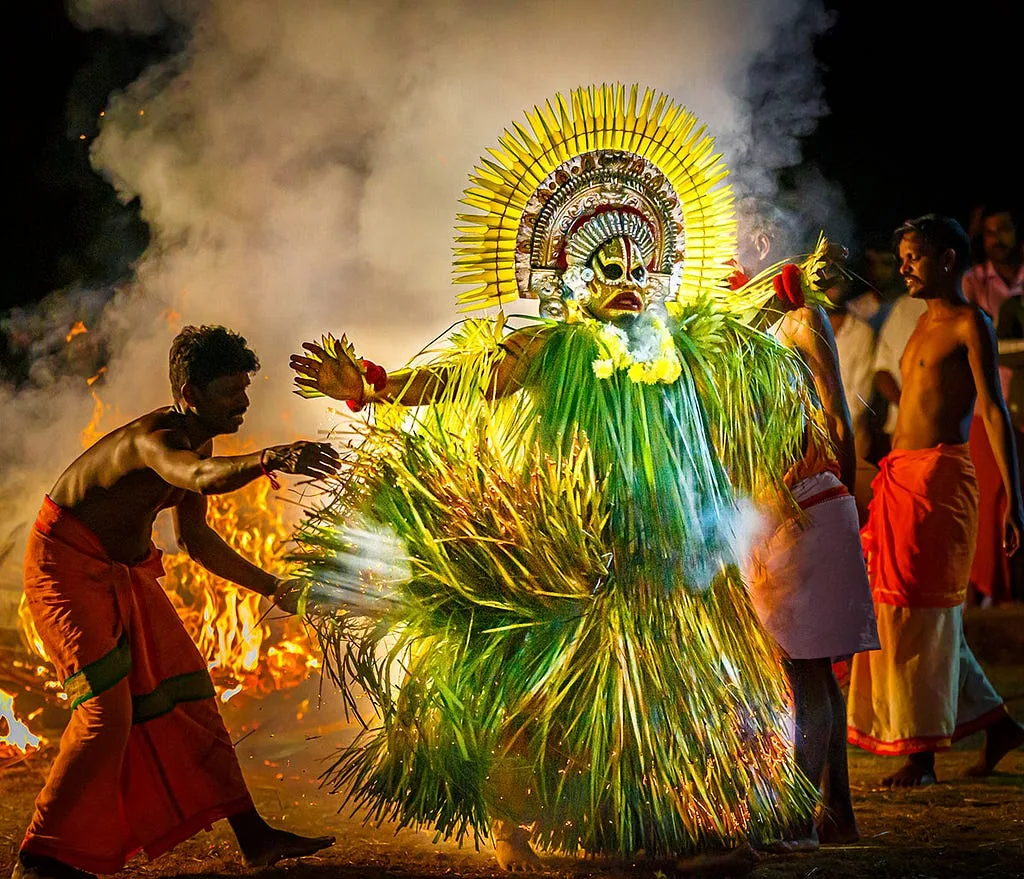
In many places, the sacred was not distant. It could enter the human body.
Trembling, trance, altered speech … these weren’t fringe. They were accepted ways of letting power communicate what it wanted.
A possessed body becomes an interface.
Just like the fierce shrine.
Ascetic traditions reveal another side.
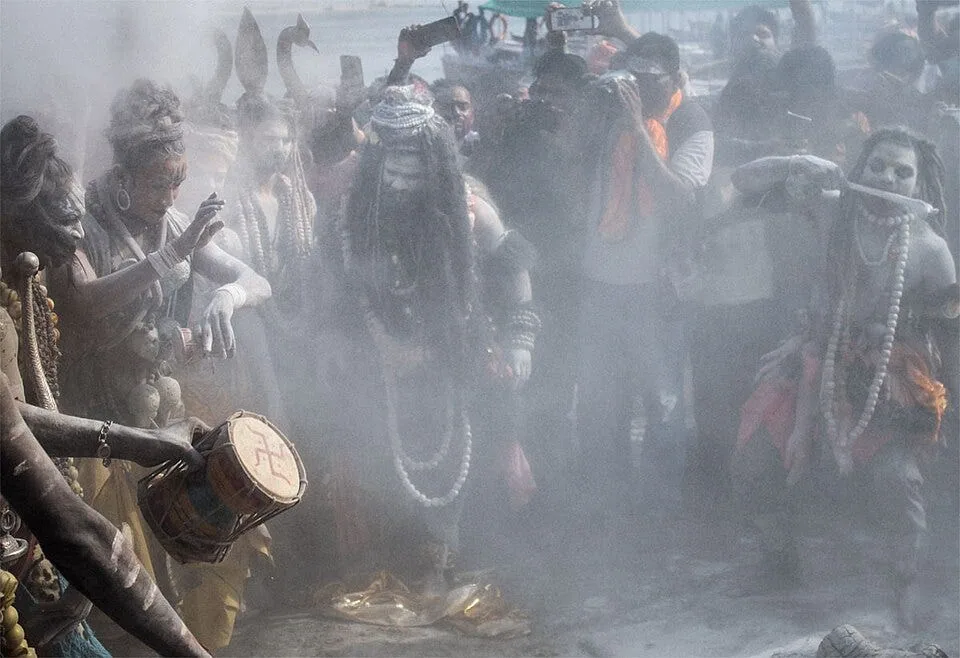
Some Shaiva paths, like Agoris, deliberately moved toward what society avoided: cremation grounds, death, decay, taboo.
Not for rebellion, but for realism.
If power governs all of life, it also governs what is frightening.
To approach it fully, one must go where it is strongest. These traditions didn’t reject fear. They walked into it.
The subcontinent’s religious density begins to make sense when you see this.
Not a replacement of gods. A multiplication of ways to live with power.
When Philosophy Arrived
Then comes another astonishing development. People begin to ask questions beyond survival.
Not only: “How do we appease this power?”
But: “What is this power, really?”
This is where Indian philosophy enters. The Upanishadic thinkers. The ascetics. Early Buddhists. Jains. Samkhya. Vedanta.
They attempt something new: explaining reality through abstraction … ultimate principles, consciousness, illusion, liberation.
From a modern perspective, it’s tempting to imagine philosophy as a clean upgrade: refined religion replacing older practices.
But that’s not what happened. Philosophy did not arrive to defeat ritual.
It arrived to outgrow it,** without evicting it**.
A farmer could do a local ritual to protect crops and still listen to ideas about the self beyond change.
A devotee could worship a form daily while believing ultimate reality is formless.
These weren’t contradictions that demanded resolution. They were different tools for different questions. Indian philosophy, for the most part, explains reality. It does not police practice.
So it becomes another layer, another lens, not a gatekeeper.
That’s why the subcontinent can hold fear and devotion, ritual and metaphysics, local shrines and cosmic principles … often within the same person.
From the outside, this can look incoherent.
From the inside, it feels practical.
Ritual addresses anxieties philosophy does not. Philosophy addresses questions ritual cannot.
Neither demands total authority.
Contradiction is a Feature, Not a Bug
So why didn’t Indian religion ever feel compelled to tidy everything into a single coherent system, like Abrahamic religions?
Because the subcontinent itself was never uniform.
Mountains, deserts, forests, river plains, coasts … each shaped different ways of living. No single ritual system could work everywhere. No single metaphysics could govern every local reality.
So religious life evolved to be context-sensitive. What worked in one region didn’t invalidate what worked in another.
A deeper psychological realism also played a role. Early religious layers never assumed the world was morally neat. Power could nurture and destroy. Life could flourish and collapse without warning.
Instead of forcing everything into one moral narrative, traditions learned to hold multiple truths:
- The sacred can be terrifying and protective.
- Devotion can coexist with fear.
- Liberation can be discussed while survival rituals continue This tolerance was reinforced by decentralization. There was no single authority interested in enforcing uniformity across a vast landscape.
So when new traditions rose, they faced a choice to erase what came before or reinterpret it. Erasure was risky. Reinterpretation was safer.
Absorption became the civilizational habit. That’s why contradiction isn’t just unresolved confusion.
It’s adaptability.
It’s memory without freezing.
It’s evolution without forgetting.
When Modernity Arrived
For most of history, Indian religion didn’t need to explain itself to an external authority. Modernity changed that.
Colonial administration. Census categories. Courts. Western education. Print culture. Later, the nation-state.
All of them brought the same demand: Definition.
Practices once carried in local memory now had to be named, classified, defended, rejected. Religion was no longer only lived. It had to be described. Description favors clarity over nuance.
Under these pressures, practices that fit textual, philosophical, “respectable” frameworks rose in status.
Others, like possession, blood rites, local spirits, and fierce appeasement, were labeled superstition or embarrassment. They were not always banned, but pushed to the margins.
Reform movements, often driven by sincere social goals, absorbed some of these assumptions. They tried to present Indian religion as rational, ethical, philosophical, and fit for modern self-respect.
In doing so, they often cleaned up the gods.
Fierceness became symbolism. Fear became ignorance. Local variation became distortion.
The result wasn’t simplification. It was a split.
A public religion: sanitized, universal, text-based, morally legible. And a private religion: older, quieter, still alive in vows, festivals, crises, and unspoken fears.
Modernity didn’t erase the layers. It strained them. It demanded that something built to be lived like a landscape must now behave like a system.
Can This Layered Inheritance Survive Another Century?
On paper, it should. These traditions survived empires, invasions, reforms, and colonial rule. But survival is not yes or no.
The real question is: what survives, and in what form?
Modernity rewards what is easy to standardize, explain, and display publicly. It penalizes what depends on local memory, ambiguity, and socially permitted “messiness”.
What will likely survive is ritual.
Because ritual addresses what remains constant in human life: anxiety, grief, uncertainty, transition. As long as life stays unpredictable, people will keep reaching for methods older than explanation.
Place-based power will also persist … though often in compressed form.
Local shrines may weaken as daily anchors but remain potent during festivals, family crises, and annual returns. Absorption, the oldest survival strategy, will continue.
Deities become cultural icons. Rituals become heritage. Folk traditions find new life online.
But what may become fragile are practices that depend on social permission. Possession rites. Intense appeasement. Transgressive ascetic paths. They may continue, but lose legitimacy.
And perhaps the biggest risk isn’t disappearance. It’s flattening.
When a layered tradition is forced to present one coherent face, something subtle is lost.
Older logics are moralized or aestheticized. Contradictions are explained away. What was once a living negotiation becomes a symbolic performance.
The inheritance survives…but as memory rather than method.
So the future isn’t bleak. It’s conditional.
If contradiction can still be tolerated … if we can accept that religion doesn’t have to be tidy … layering can continue.
If coherence becomes a moral demand, the tradition will survive only in simplified form. Which returns us to the real question.
Not whether this inheritance can survive modern pressure.
But whether we can allow it to remain imperfect, uncomfortable, unresolved .. the way it has always been.
And maybe the most useful lens to carry forward is this:
If you want to understand any Indian deity, don’t ask only what the scripture says.
Ask something older:
What problem did this god solve first?
That’s my learning for today!