Indian Thought
The Timeless Evolution of Shiva
Ascetic, dancer, destroyer. Shiva was not born whole: he accumulated, absorbing a wild forest power, a storm god and a yogi across four thousand years.
On this page
- Origins
- From the Wild to the Storm: The Birth of Rudra
- From Rudra to Shiva: The God Who Walks Between Worlds
- The Shatarudriya: Rudra Becomes Shiva
- Taming the Storm: The Brahmanas and Upanishads
- The Yogi Who Left the World Behind
- Shiva: The Great Yogi and His Rise in the Epics
- The Yogi Beyond Time
- Shiva in the Mahabharata
- Shiva in the Ramayana
- The Protector of Empires and the Rise of Temples
- The Kushan Dynasty: Shiva as the God of Kings
- The Gupta Dynasty: The Golden Age of Shaivism
- The Birth of Shiva Temples
- The Chola Empire: Shiva’s Glory in the South
- The Rise of Bhakti
- By this point, Shiva was everywhere.
- The Aghoris and Kapalikas
- The Kapalikas: Shiva’s Devotees of the Skull
- The Aghoris: Beyond Fear, Beyond Duality
- The Nath Yogis: Shiva as the Master of Yoga
- What Made the Nath Yogis Unique?
- Tantra and the Cosmic Union of Shiva and Shakti
- Three Paths, One Shiva
- Shiva in the Modern World
- Shiva in Philosophy: The Symbol of Change and Timelessness
- Shiva’s Influence Beyond India: A Global Icon
- Shiva Today: Why He Still Matters
- The Eternal Dance: Shiva in You
Shiva. The name alone stirs something deep within, a sense of mystery, power, and stillness all at once. He is not just a god; he is a paradox, a force of nature, a reflection of the universe itself. The meditating sage lost in the Himalayan snows, the cosmic dancer who sets the rhythm of existence, the fierce destroyer whose wrath reshapes worlds: Shiva embodies all of it.
But was he always this vast, cosmic figure? His story begins not in grand temples or sacred scriptures but in the earliest whispers of civilization, etched into ancient seals, murmured in the winds of primeval forests, invoked in the fire-lit hymns of nomadic seers. Over thousands of years, Shiva evolved, absorbing layers of meaning from different cultures, beliefs, and philosophies. He was once a wild, untamed force, then a fearsome storm god, later a yogi who transcended worldly desires, and finally, Mahadeva: the great god worshipped across empires and ages.
This is not just the story of Shiva. It is the story of how human beings have sought to understand the divine. As we trace his journey (from the Indus Valley to Vedic hymns, from warrior kings to Bhakti saints, from secretive ascetics to everyday devotees), we find a truth deeper than mythology. Shiva did not merely evolve. He became a mirror to the ever-changing, ever-seeking human soul.
Origins
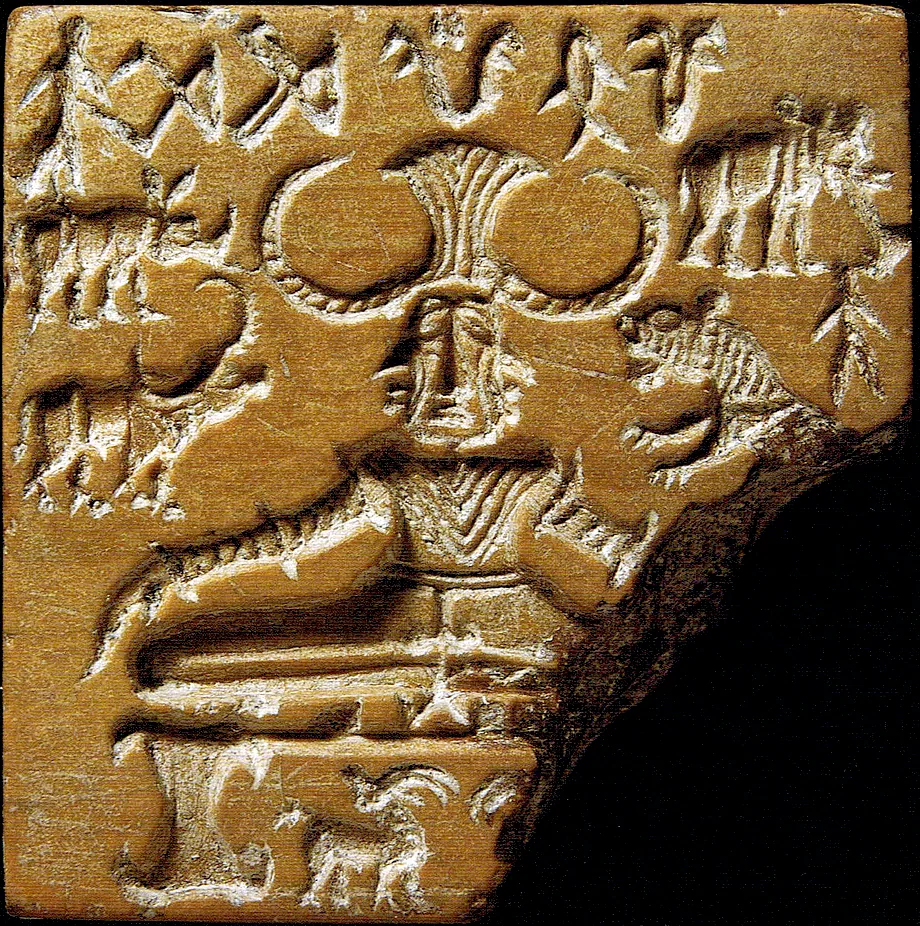
Over 5,000 years ago, long before the towering temples and intricate myths, before he was called Shiva or Rudra, a presence stirred in the hearts of ancient people. The people of the Indus Valley Civilization (IVC), one of the world’s earliest urban societies, lived close to nature: relying on rivers, animals, and the rhythms of the earth for survival. Among the ruins of their great cities (Mohenjo-Daro, Harappa), archaeologists discovered a curious artifact: a small steatite seal, no larger than a coin, depicting a horned figure seated in meditation, surrounded by animals.
This enigmatic figure is known as the Pashupati Seal, named after Pashupati, “Lord of Animals,” a title that would later be associated with Shiva. The figure’s posture resembles padmasana (the lotus pose), a position linked to yogic stillness and spiritual focus. His gaze is intense, his body rooted in stillness, yet the animals around him symbolize wild, untamed energy. He is both the master of nature and one with it.
Was this the earliest glimpse of Shiva?
Scholars debate this possibility, but what matters is not whether the name “Shiva” was spoken in those days, but the essence that the image represents: a force that bridges chaos and order, destruction and fertility, meditation and wilderness. The Pashupati figure is not a god of conquest, nor a ruler of men, but a presence that belongs to the very fabric of life itself: a theme that will echo through Shiva’s evolution for millennia.
From the Wild to the Storm: The Birth of Rudra
As centuries passed, a new spiritual language took shape in the vast open lands of early India. Nomadic tribes chanted hymns to nature, to the rivers, to the storms. The Rig Veda, the oldest of the Vedas, contains verses that call upon a fearsome deity: Rudra, the Howler.
Rudra was not yet Shiva, but he carried some of the same contradictions. He was the storm-bringer, the unpredictable force of nature whose rage could bring destruction, yet whose healing touch could cure sickness. The Vedic seers both feared and revered him. In one breath, they pleaded for his mercy, asking him to turn his arrows away from their cattle and homes. In another, they praised him as Bhishak, the Divine Healer.
This duality (destroyer and protector, terrifying yet benevolent) would become one of the defining traits of Shiva. Rudra’s wild, untamed nature echoed the Pashupati spirit, but he was now spoken of in hymns, woven into ritual chants, gradually becoming part of a structured pantheon.
Yet Rudra was still an outsider. Unlike the orderly gods of fire, sun, and sacrifice, he belonged to the fringes: to the forests, the mountains, the storms. The priests feared him, the common people called upon him in times of need, but no one could fully control him.
And so, Rudra waited at the edges of the sacred fires, neither fully embraced nor forgotten.
But in time, something remarkable happened.
The priests who once feared Rudra began to call him Shiva, the Auspicious One. A name meant to soothe his destructive force, a name meant to transform fear into devotion.
This was not just a change in name. It was a shift in how people saw the divine. Rudra was no longer just a storm-god to be feared; he was becoming something larger, something more universal, a being who could both destroy and renew, who could exist outside the ordered rituals but still hold the highest wisdom.
This transformation was only just beginning. Over the centuries, Rudra would merge with local deities, absorb elements from different cultures, and take on new dimensions, evolving into the Shiva we recognize today.
The force that once howled through the storms was now being invited into temples, into homes, into the deepest meditations of seekers.
Shiva, the timeless wanderer, had begun his journey into the hearts of millions.
From Rudra to Shiva: The God Who Walks Between Worlds
Rudra was a god of paradoxes, a storm that both destroyed and healed, a figure feared yet worshipped. But his transformation into Shiva, the benevolent, was not instant. It was a slow merging of traditions, a shift not just in names but in how people understood the divine.
As India’s spiritual landscape evolved, Rudra’s wild energy began to soften. The priests who once called upon him cautiously in Vedic hymns now spoke of him with reverence, seeking his grace rather than fearing his wrath. His presence extended beyond the stormy skies and into sacred spaces, meditative realms, and even the human heart.
But how did this happen?
The Shatarudriya: Rudra Becomes Shiva
One of the most important texts in this transformation is the Shatarudriya, a section of the Yajur Veda that is essentially a hymn of one hundred names of Rudra.
Here, Rudra is no longer just the fierce god of storms. He is everywhere and everything. The verses describe him as present in mountains, forests, rivers, animals, herbs, the winds, the lightning, and even the smallest elements of existence.
They do not just fear Rudra: they worship him. They call upon his healing side, his guiding hand. They invoke him as Shiva, the auspicious one.
This is a profound shift. Rudra is no longer an outsider to the Vedic world. He is being invited in, transformed through prayer into something greater.
One moment, the hymns speak of him as the destroyer of evil, the next as the healer of wounds. One moment, he is the raging storm, the next, the quiet presence in the heart of the yogi.
This duality was not a contradiction. It was the essence of Shiva.
Taming the Storm: The Brahmanas and Upanishads
As Indian philosophy evolved, so did Shiva. The Brahmanas (ritual commentaries) and later the Upanishads reshaped his role even further.
The Shatapatha Brahmana, an early Vedic text, speaks of Rudra’s birth from Prajapati, the creator-god. Rudra is born full of wrath, so powerful that even the gods fear him. To pacify him, they give him a new name, Shiva.
This story shows a key theme: Shiva is not separate from destruction, but he transforms it into something auspicious.
The Shvetashvatara Upanishad (around 4th–5th century BCE) takes this even further. It no longer describes Shiva as just a god. It elevates him to the highest principle of existence.
एको हि रुद्रो न द्वितीयाय तस्थुर्य इमांल्लोकानीशत ईशनीभिः। प्रत्यङ्जनांस्तिष्ठति सञ्चुकोचान्तकाले संसृज्य विश्वा भुवनानि गोपाः॥
eko hi rudro na dvitīyāya tasthurya imāṁllokānīśata īśanībhiḥ | pratyaṅjanāṁstiṣṭhati sañcukocāntakāle saṁsṛjya viśvā bhuvanāni gopāḥ ||
Meaning: He who protects and controls the worlds by His own powers, He, Rudra, is indeed one only. There is no one beside Him who can make Him the second. O men, He is present inside the hearts of all beings. After projecting and maintaining all the worlds, He finally withdraws them into Himself.
This was a turning point. Rudra was no longer just a storm god, a healer, or a deity of sacrifice. He was becoming a supreme cosmic force, the universal consciousness itself.
This set the stage for the next evolution of Shiva, not just as a deity, but as the great ascetic, the yogi, the god of ultimate realization.
The Yogi Who Left the World Behind
By the time of the Upanishads, Indian spirituality was shifting.
The question was no longer about which gods to worship, but about something deeper: Who are we? What is reality? What is liberation?
In the forests and mountains, sages renounced the world, seeking enlightenment through meditation. The idea of the ascetic, one who gives up worldly life to seek truth, became central.
Shiva fit perfectly into this new spiritual landscape.
- He was already a god of the mountains, the wilderness, the margins of society.
- He was already a figure who transcended the rules of the world.
- He was already both fearsome and kind, distant yet deeply connected to all life. So, Shiva became the great yogi, the meditating ascetic whose silence held the secrets of the universe.
The wild storm-god had transformed, not into a ruler, not into a warrior, but into something greater. He became the embodiment of both the chaos of existence and the stillness at its core.
Shiva: The Great Yogi and His Rise in the Epics
By the time Shiva was fully embraced as the Auspicious One, he had become something more than a god of storms, more than a force of destruction. He had evolved into the supreme yogi, the master of stillness, the seeker of truth, the one who sat unmoved while the universe churned around him.
But Shiva was never just one thing. Even as he meditated in the icy caves of the Himalayas, his legend was about to take a new turn. He was about to descend from his mountaintop and enter the world of kings, warriors, and epics.
This was the time of the Mahabharata and the Ramayana, stories that would define the spiritual landscape of India for millennia. And in them, Shiva was no longer just the silent ascetic. He had become a god who walks among men.
The Yogi Beyond Time
Imagine a figure sitting alone in the mountains, deep in meditation. His body is smeared with ash. His hair, matted and wild, holds the river Ganga in its tangled locks. A serpent coils around his neck, unmoving, as if frozen in time.
This is Shiva, the Maha Yogi.
He does not seek power. He does not crave riches. He is beyond the pleasures and pains of the world. He is the silent witness, watching, but not interfering.
But then, something shifts.
The world of men calls out to him.
A warrior seeks his blessing. A demon disrupts the balance of existence. A great war looms on the horizon.
Shiva cannot remain untouched forever. He must descend from his stillness and become something else: a protector, a giver of boons, a participant in the great cosmic drama of the epics.
Shiva in the Mahabharata
The Mahabharata, the great epic of war and destiny, is filled with gods and celestial beings. But among them, Shiva holds a special place. He is not a king like Indra, nor a preserver like Vishnu. Instead, he is the one who tests heroes, grants them power, and reminds them of the cosmic order.
One of the most famous encounters in the epic is Arjuna’s journey to meet Shiva.
- Arjuna, the great warrior of the Pandavas, seeks a divine weapon to defeat his enemies.
- He leaves his kingdom and travels to the Himalayas, where he performs intense austerities, standing on one leg, fasting, praying to Shiva.
- Days turn into weeks. Weeks turn into months. Finally, Shiva appears, not as a god, but disguised as a hunter, Kiraata.
- The two engage in a fierce battle, neither yielding. Arjuna, exhausted but determined, finally realizes the truth: he is fighting Shiva himself.
- Overwhelmed, Arjuna bows, and in return, Shiva grants him the Pashupatastra , a weapon of unimaginable power, capable of destroying worlds. This story is significant because it cements Shiva’s role as the ultimate test-giver. He does not grant his gifts easily. Those who seek his blessings must prove their worth, not through devotion alone, but through endurance, wisdom, and humility.
For warriors and kings, Shiva became a god of power and protection. He was the deity of those who stood on the edge of life and death, those who understood that destruction was not the end, but a necessary part of the cosmic cycle.
Shiva in the Ramayana
In the Ramayana, Shiva plays a quieter but equally profound role.
Ravana, the demon king, is a fierce devotee of Shiva. He prays to him, sings hymns in his praise, and even performs extreme penance: at one point, offering his own heads as sacrifice. Pleased, Shiva grants Ravana immense strength and boons, making him nearly invincible.
But Shiva is not merely a god of warriors: he is also the protector of balance. Ravana’s arrogance grows, and he becomes a tyrant.
In time, it is Vishnu (as Rama) who must defeat Ravana, restoring order.
This story highlights another aspect of Shiva: he is a giver of power, but he does not dictate how it is used. He bestows his blessings freely, whether on gods or demons, saints or warriors. But the cycle of karma remains untouched. Power misused will ultimately lead to downfall.
This is why, even as a warrior’s god, Shiva remains detached. He does not interfere in the affairs of men unless called upon. And even then, his gifts come with a price, the understanding that power, like all things, is fleeting.
By the time of the Mahabharata and Ramayana, Shiva had evolved beyond the wilderness and ascetic traditions. He had become a god who belonged to kings, warriors, and entire empires.
But something even greater was about to happen.
The Protector of Empires and the Rise of Temples
By the time the great epics had been sung across the land, Shiva was no longer just the wild ascetic of the mountains, nor just the god of warriors who sought his blessings before battle. He had become something larger, the guardian of empires, the divine center of civilization, the deity enshrined in temples that would stand for millennia.
Kings and rulers now turned to him, not just for personal strength, but for the strength of their entire kingdoms. Shiva had become Mahadeva, the Great God, a symbol of cosmic order, sovereignty, and divine authority.
But how did an outsider god, once feared in the Vedic hymns, become the very embodiment of civilization itself?
The Kushan Dynasty: Shiva as the God of Kings
By the 1st century CE, a powerful empire had risen in the northwest of India, the Kushan Empire. The Kushans were a warrior people, ruling over a vast, multicultural realm that stretched from Central Asia to northern India. They were not bound by a single religion; instead, they absorbed and blended beliefs from Greek, Persian, Indian, and Buddhist traditions.
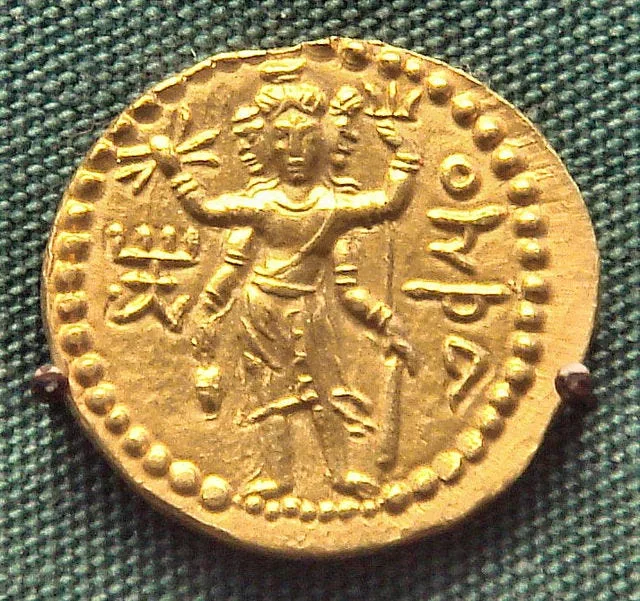
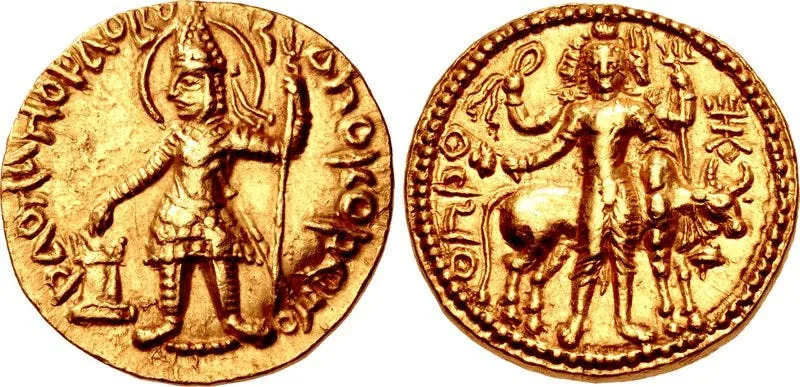
And among the gods they chose to honor on their royal coins, one stood out: Shiva.
- Shiva on Kushan Coins: The Kushan kings, especially Kanishka I, minted coins depicting a powerful, trident-wielding figure with a bull (Nandi) beside him. This was Shiva as Oesho, a name derived from earlier Indo-Iranian influences.
- The imagery was clear: Shiva was not just a mystic god of meditation: he was a warrior, a protector, a ruler of cosmic power.
- The trident symbolized his command over creation, preservation, and destruction. The bull, Nandi , represented strength, endurance, and unwavering loyalty: a perfect metaphor for a stable empire. For the first time, Shiva was being cast in the role of a royal deity, a god who stood alongside emperors.
But the Kushans were only the beginning. The next great rulers of India, the Guptas, would elevate Shiva even further, making him a permanent, central figure in India’s spiritual and political landscape.
The Gupta Dynasty: The Golden Age of Shaivism
The Gupta Empire (4th–6th century CE) is often considered a golden age in Indian history. Art, science, literature, and philosophy flourished. And at the heart of this era’s spiritual world stood Shiva, now fully recognized as Mahadeva, the Supreme God.
- The Guptas were Vaishnava kings, but they were deeply devoted to Shaivism. They commissioned grand temples, intricate sculptures, and philosophical texts that solidified Shiva’s status as the highest deity.
- The Shiva Puranas , which narrated his cosmic role, his myths, and his relationship with Parvati, began to take shape during this time.
- The Agamas , which laid the foundation for temple worship, established systematic rituals that would define Shaivism for centuries. Shiva was no longer just a god of individuals: he was now the god of entire civilizations. His temples became the center of royal patronage, and his worship became structured, organized, and spread across India.
The Birth of Shiva Temples
Before this period, Shiva was mostly worshipped through natural symbols, mountains, rivers, and especially the Shiva Linga, a representation of his creative and cosmic energy. But now, under the Guptas and later dynasties, grand temples were built in his honor.
A typical Shiva temple had:
- Garbhagriha (Sanctum Sanctorum): The inner chamber where the Shiva Linga was enshrined.
- Shikhara/Vimana (Towering Structure): Representing Mount Kailash, Shiva’s celestial abode.
- Mandapa (Prayer Hall): Where devotees gathered for rituals and chanting. Some of the earliest and most stunning Shiva temples include:
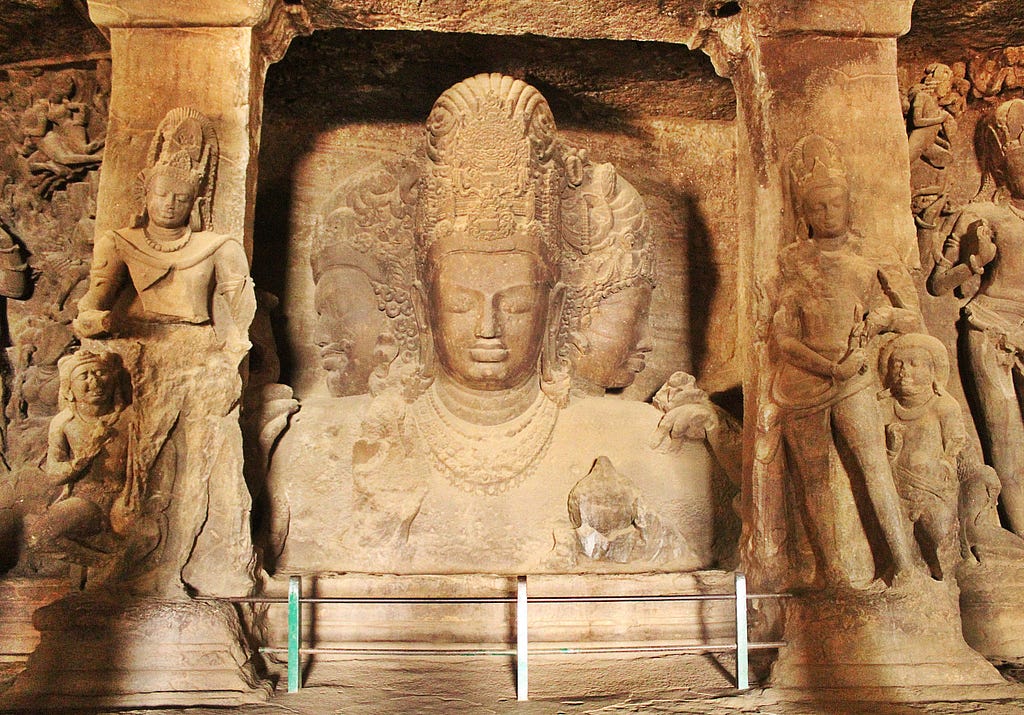
- Elephanta Caves (5th–6th century CE): A breathtaking rock-cut temple where Shiva is depicted in multiple forms, as the cosmic dancer (Nataraja), the destroyer (Bhairava), and the serene meditator (Yogeshwara).
- Udayagiri Caves: Depicting Shiva as the cosmic protector, defeating demonic forces. These temples were not just places of worship: they were statements of power. They signified that Shiva was now woven into the very foundation of society.
The Chola Empire: Shiva’s Glory in the South
While the Guptas spread Shaivism across North India, it was in the South, under the Chola dynasty (9th–13th century CE), that Shiva’s temple culture reached its peak.
The Cholas, one of the greatest dynasties of South India, saw Shiva as their divine protector. They built some of the most magnificent temples ever created:
- Brihadeeswarar Temple (Thanjavur): A massive temple dedicated to Shiva, featuring a huge Shiva Linga and a towering vimana, one of the tallest of its kind.
- Chidambaram Temple: Home to Shiva as Nataraja , the cosmic dancer whose dance symbolizes the eternal rhythm of the universe. Under the Cholas, Shiva was not only a god of meditation and asceticism but also a divine king, the ruler of time itself. His temples became centers of art, music, philosophy, and political power.
The Rise of Bhakti
As grand as these temples were, another movement was taking root, a movement that would make Shiva not just the god of kings, but the god of the people.
The Bhakti movement, which began around the 6th century CE, emphasized direct, personal devotion to a deity. Instead of focusing on elaborate rituals, Bhakti saints sang of love, longing, and surrender to Shiva.
In Tamil Nadu, the Nayanars (Shaivite saints) composed beautiful hymns in his praise.
- Appar, Sambandar, and Sundarar wrote deeply emotional poems, describing Shiva as not just a cosmic force, but a beloved friend, father, and guide.
- Manikkavachakar spoke of Shiva’s boundless grace, calling him the one who listens to the cries of even the lowliest devotee. For the first time, Shiva was not just a god of rituals and philosophy: he was a personal, accessible deity. People saw him not just in grand temples, but in their daily lives, in their joys and sorrows.
This movement spread rapidly, reaching all corners of India, influencing poetry, music, and even the way temples were built. It ensured that Shiva’s worship would never be confined to kings and priests: it belonged to everyone.
By this point, Shiva was everywhere.
- In temples and palaces, where kings bowed before him, seeking his blessings for their rule.
- In the poetry of saints, where he became the divine lover, the merciful protector, the all-encompassing presence.
- In the minds of yogis and ascetics, where he remained the great renouncer, lost in meditation. And yet, Shiva was still beyond definition.
He was the god of destruction , yet also the giver of life. He was the supreme ascetic , yet also a husband, a father, a dancer, a warrior. He ruled both the great empires and the lonely cremation grounds.
Even as time moved forward, Shiva remained unchanging, timeless: both within history and beyond it.
And the story was far from over.
As the medieval world unfolded, new sects, traditions, and philosophies would redefine Shiva once more, shaping his image for future generations.
The Aghoris and Kapalikas
Not all worshipers of Shiva came to him through devotion and song. Some walked the most extreme paths imaginable, breaking every social convention, and embracing what the world rejected.
These were the Aghoris and their predecessors, the Kapalikas, sects that saw Shiva not in the temples, but in the cremation grounds.
The Kapalikas: Shiva’s Devotees of the Skull
The word Kapalika means “skull-bearer”, and this sect, which emerged around the 8th century CE, followed Shiva in his most terrifying form: as Bhairava, the fierce one.
- Kapalikas wore garlands of skulls , smeared their bodies with ashes from funeral pyres, and practiced rituals that defied every norm.
- They carried a kapala (skull cup), often using it for food and drink, symbolizing their rejection of worldly attachments.
- They believed that true liberation could only be found by breaking every boundary, purity and impurity, life and death, fear and acceptance. For the Kapalikas, Shiva was not just the destroyer of worlds: he was the destroyer of illusions.
Society saw them as terrifying, but they saw themselves as Shiva’s truest devotees, walking his path not in temples, but among fire and bones, in the shadow of death itself.
The Aghoris: Beyond Fear, Beyond Duality
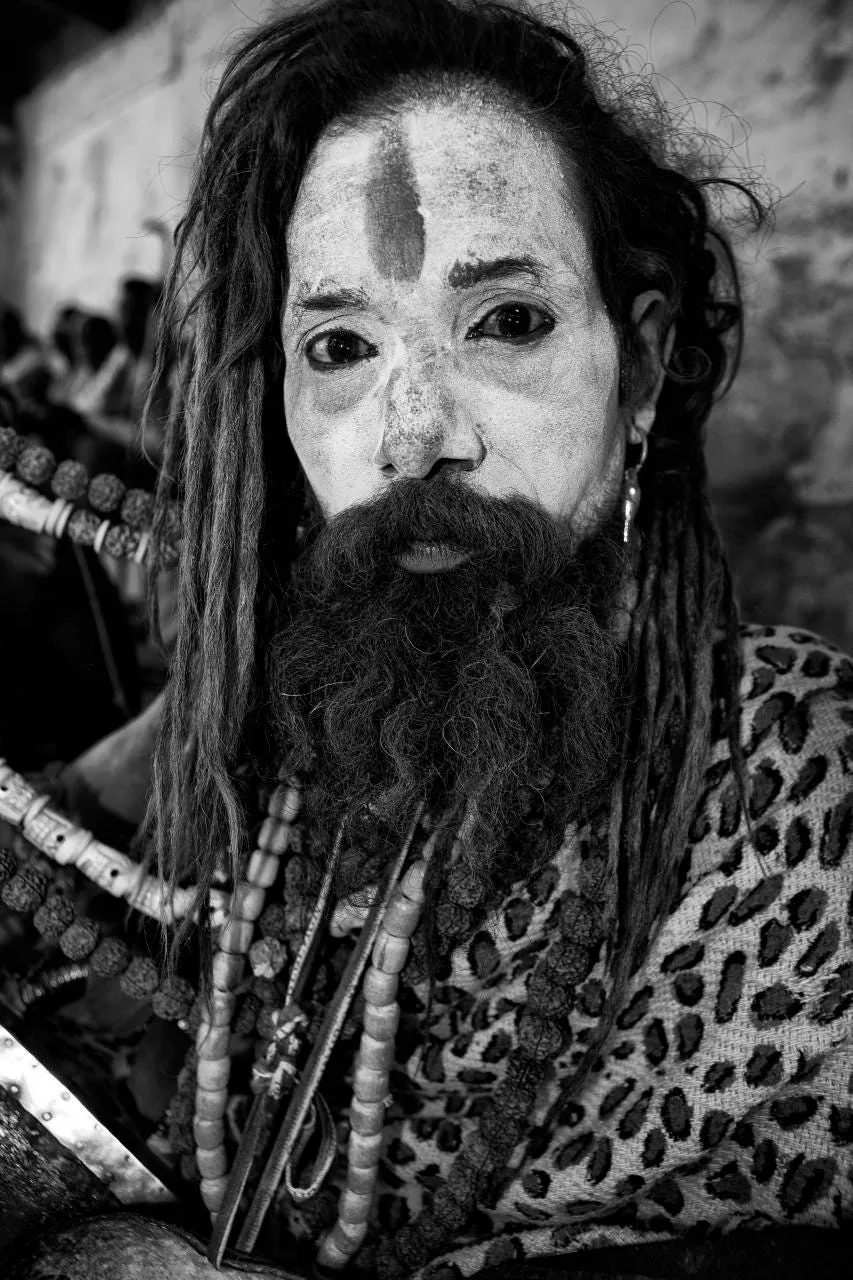
The Aghoris, who evolved from these traditions, are still present today, particularly in Varanasi, the city of Shiva, where they roam the burning ghats of the Ganges.
- They take the Kapalika path even further, embracing the impure to prove that all things are Shiva.
- They meditate among funeral pyres, consume what others find repulsive, and break every social boundary: believing that nothing is pure or impure in the eyes of the divine. For an Aghori, to see Shiva is to see him everywhere, in the saint and the sinner, in the beautiful and the grotesque, in life and in death.
Their extreme practices shock the world, but to them, it is simply a path to truth: a path that requires burning away all illusion.
The Nath Yogis: Shiva as the Master of Yoga
While the Aghoris embraced the raw, untamed aspect of Shiva, another tradition sought him through inner mastery, discipline, and deep meditation: the Nath Yogis.
The Nath tradition, which flourished around the 10th century CE, traces its roots back to Adinath: the “First Master,” identified as Shiva himself.
One of the greatest Nath masters, Matsyendranath, was said to have received Shiva’s secret teachings on yoga while meditating deep under the ocean. His disciple, Gorakhnath, would go on to spread these teachings across India, establishing the foundation of Hatha Yoga.
What Made the Nath Yogis Unique?
- Unlike temple priests who performed rituals, the Nath Yogis sought enlightenment through the body, breath, and mind.
- They believed that Shiva’s ultimate gift was yoga, the ability to control one’s energy, awaken higher consciousness, and merge with the divine.
- They practiced Hatha Yoga , which emphasized physical postures (asanas), breath control (pranayama), and deep meditation.
- Their ultimate goal was to awaken Kundalini , the dormant divine energy within every being, and unite with Shiva within themselves. For the Nath Yogis, Shiva was not just a god to be worshipped: he was a state of being, a goal to be realized.
Their teachings would later influence Tantra, Vedanta, and even modern yoga as we know it today.
Tantra and the Cosmic Union of Shiva and Shakti
Parallel to the Nath tradition, another spiritual movement was growing: one that saw Shiva not alone, but in eternal union with Shakti, the divine feminine.
Tantric Shaivism, which flourished in regions like Kashmir and Bengal, took a radically different view of Shiva.
- Instead of seeing Shiva as a detached ascetic , Tantra saw him as inseparable from Shakti, the dynamic energy of the universe.
- Shiva was pure consciousness , and Shakti was the force that moves existence itself.
- Their union was not just mythological: it was a symbol of the balance within every person, within the cosmos itself. Kashmir Shaivism, one of the most profound schools of this philosophy, taught that all of reality is a manifestation of Shiva’s cosmic awareness.
For Tantric practitioners, spiritual enlightenment was not about renouncing the world: it was about experiencing it fully, embracing both stillness and motion, Shiva and Shakti, without separation.
This was a path of deep mysticism, one that saw divinity not as something distant, but as something within every breath, every thought, every moment of existence.
Three Paths, One Shiva
By this time, Shiva had become many things to many seekers:
- To kings and warriors, he was Mahadeva , the supreme protector.
- To temple devotees, he was the loving father, the giver of blessings.
- To the Nath Yogis, he was Adinath, the teacher of ultimate liberation.
- To the Aghoris, he was the raw, untamed force beyond fear and illusion.
- To Tantric mystics, he was consciousness itself, always in union with Shakti. Despite their differences, all these paths led to the same truth:
That Shiva is everywhere, in all things, beyond all limits.
As the centuries passed, Shiva’s presence remained unshaken. His temples stood tall, his stories continued to be told, and his seekers still walked their paths: some through devotion, some through asceticism, some through inner realization.
Even today, in the 21st century, his essence still captivates minds, still calls to those who seek the deeper truths of existence.
Perhaps that is why Shiva remains timeless.
Because whether you look for him in a temple, a mountain cave, a sacred text, or the depths of your own mind:
You will always find him there.
Shiva in the Modern World
Centuries have passed. Kingdoms have risen and fallen. Empires that once carved Shiva’s name in stone are now dust. And yet, Shiva remains.
His name still echoes in temples at dawn, in the whispered prayers of millions, in the chants of monks in the Himalayas, and in the rhythmic beats of drums during Mahashivaratri.
But beyond religion, beyond myth, beyond temples: Shiva lives on as an idea.
His essence has moved beyond the borders of India, beyond Hinduism itself. His story speaks not just to devotees, but to seekers, philosophers, artists, and even scientists.
How did a god who once roamed the mountains become a timeless, global symbol of transformation, meditation, and cosmic balance?
Shiva in Philosophy: The Symbol of Change and Timelessness
Shiva is often called Mahakaal, the Lord of Time. But unlike human rulers who measure time in victories and defeats, Shiva’s time is eternal.
- He is older than the Vedas , yet his presence is as fresh as the morning sun.
- He destroys, yet preserves, reminding us that every end is a new beginning.
- He sits in stillness , yet in his dance (Nataraja), he sets the entire cosmos in motion. This duality (movement and stillness, destruction and creation, the seen and the unseen) has fascinated thinkers for centuries.
Even in modern philosophy and science, Shiva’s presence can be felt:
- In quantum physics , where matter is both a wave and a particle, we see Shiva’s dance of opposites.
- In black holes , which devour everything but are also the birthplace of new galaxies, we see Mahakaal, the cosmic destroyer and creator.
- In modern psychology , where the mind must destroy old beliefs to evolve, we see the wisdom of Shiva’s third eye: the eye that burns away illusion. Shiva is not just a god. He is a metaphor for the universe itself.
Shiva’s Influence Beyond India: A Global Icon
Though deeply rooted in Indian traditions, Shiva’s influence has transcended borders.
-
Shiva in Buddhism:
-
In Tibet and Nepal, Shiva was absorbed into Buddhist traditions as Mahākāla, the Great Time , a protector deity.
-
His consort, Shakti, became Tara , a guiding force of compassion.
-
Many Buddhist monks in the Himalayas still revere Shiva as the original yogi. Shiva in Yoga and Meditation:
-
Modern Hatha Yoga traces its roots to the Nath tradition, where Shiva is Adinath, the first master of yoga.
-
The practice of kundalini awakening , where energy rises from the base of the spine to enlightenment, mirrors Shiva’s journey of self-realization.
-
Meditators across the world, from Zen monks to Western seekers, resonate with Shiva’s stillness, his ascetic ideal. Shiva in Popular Culture:
-
In the West , Shiva’s image has become a symbol of meditation, cosmic power, and transformation.
-
His dance, Nataraja , has been adopted by artists and even scientists: his statue stands outside CERN , the world’s leading physics laboratory, as a symbol of cosmic cycles.
-
Hollywood, anime, and even video games reference Shiva’s third eye, trident, or cosmic dance. Shiva’s appeal is not just religious: it is deeply philosophical, artistic, and universal.
Shiva Today: Why He Still Matters
In a world that constantly changes, in a time of uncertainty and transformation, Shiva’s lessons are more relevant than ever.
**In a fast-moving world, he reminds us of stillness. **When the mind is restless, when the world pulls us in a thousand directions, Shiva sits in meditation, untouched, reminding us to return to our center.
**In a world of destruction, he reminds us of renewal. **We fear endings (of relationships, careers, identities), but Shiva shows us that destruction is just another word for transformation.
**In a world of illusion, he reminds us to see beyond. **His third eye burns away falsehoods, urging us to look deeper, to seek truth beyond surface appearances.
Shiva’s presence is not in the past. He is here, now, in every moment of transformation.
The Eternal Dance: Shiva in You
Perhaps the greatest reason Shiva has endured is this:
He does not ask for blind worship. He asks you to awaken the Shiva within yourself.
He is not a god who sits in judgment. He is not the one who demands obedience. He is simply a mirror.
- A mirror to your stillness and your chaos.
- A mirror to your destruction and your renewal.
- A mirror to your journey inward, where all opposites dissolve, and you become free. This is why his name still echoes across time.
Because Shiva is not in the past. He is in you. In every breath. In every moment of transformation.
And just as Shiva has always done: you, too, will change, evolve, destroy, and create.
Because that is the nature of the universe.
And that is the nature of Shiva.
That’s my learning for today!